The construction industry should not put off tackling problems, but rather dare to embrace them. That is the view of Onno Dwars, CEO of Ballast Nedam Development and chairman of the Dutch Green Building Council. According to him, climate change, the housing shortage, grid congestion, and rising healthcare costs are not separate issues, but rather a single design challenge for the living environment of tomorrow.
Buildings are more than just places to live and work. The way neighborhoods, cities, and public facilities are designed helps determine how people live, move around, and interact with one another. As a result, the built environment influences not only the climate and biodiversity, but also health, the economy, and overall well-being.
I’m a big advocate of embracing problems. Where others see a problem as a threat, I genuinely see it as an opportunity.Onno Dwars – CEO of Ballast Nedam Development
Dwars believes this places a great responsibility on developers and construction companies. Together with governments and civic organizations, they are shaping part of the future of society. That is precisely why urgent problems should not be viewed solely as constraints.
This embed uses marketing cookies. Accept marketing cookies to show the embed.
The market needs to show what’s possible
That attitude requires more than just ambitious words. According to Dwars, market players must demonstrate through concrete projects what is already possible today. They can then work with government agencies to determine which regulations and financial conditions are needed to implement innovation on a larger scale.
The shift toward gas-free and energy-efficient construction shows that this can work. In 2018, Ballast Nedam decided to build exclusively gas-free, in anticipation of stricter regulations. Energy efficiency ratings, once dismissed by many as largely irrelevant, now play a clear role in the valuation and purchase of homes.
Yet, according to Dwars, sustainability is still too often a matter of building “less badly.” Truly sustainable construction means that future generations will not suffer harm from the choices being made today. The sector isn’t there yet. Tender requirements, land prices, time constraints, warranties, and outdated regulations limit what is feasible within projects.
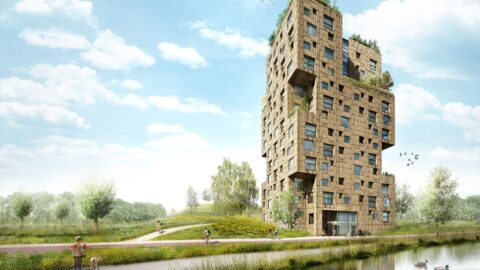
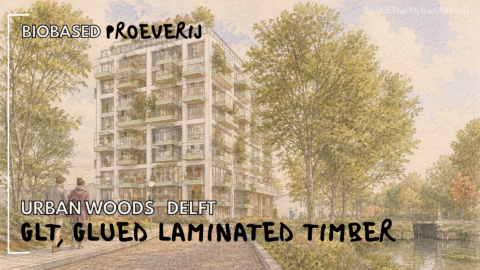
That’s why pioneering projects are indispensable. At Horizons in Amsterdam’s Sluisbuurt neighborhood, it took a long time to obtain approval for a 40-meter-tall building constructed largely of wood. The knowledge gained has now made it possible to work more quickly on a 100-meter-tall hybrid wooden tower. Not every project needs to be a radical breakthrough, as long as exceptional projects bring us closer to the standard of tomorrow.
From Housing to Health
The next step goes beyond energy and materials. Dwars wants to investigate how the built environment can contribute to a longer and healthier life. In the Cartesius neighborhood development project in Utrecht, researchers are therefore examining which spatial interventions can help prevent health problems.
This shifts the focus from care to prevention. A neighborhood that encourages physical activity, social interaction, and healthy behavior can generate social value that is scarcely visible in traditional real estate calculations. According to Dwars, the knowledge about this already exists, but it is not yet sufficiently integrated into design and urban development.
Radical questions and long-term commitment
Dwars hopes that CO₂-neutral construction can become the norm between 2030 and 2035. To achieve this, long-term programs are needed in which the market and the government work together toward a clear goal on the horizon. Small improvements aren’t enough: those who aim to improve performance by just 10 percent will mainly end up tweaking existing methods. Radical ambitions force us to make fundamentally different choices.
At the same time, he warns against expecting major changes to yield quick results. Area development takes years and requires administrators, companies, and professionals who are committed to the same goal over the long term.
His advice to the sector is therefore clear: “Work over the long term toward a future in which the bar can be set much higher.”