The established Dutch building materials industry seems to be putting more energy into protecting its existing, CO₂-intensive products and production processes than into innovating them, notes opinion leader Jan Willem van de Groep. According to him, this is an unwise strategy. He points to the European automotive industry, which has long tried to protect the internal combustion engine. Meanwhile, Chinese manufacturers—who invested in electric vehicles on a large scale much earlier—are now putting European automakers under significant pressure.
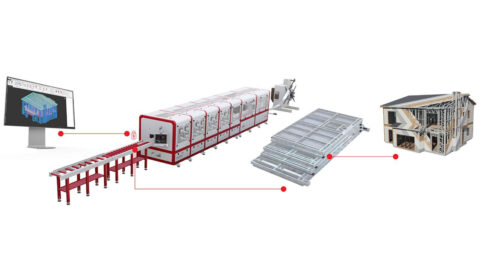
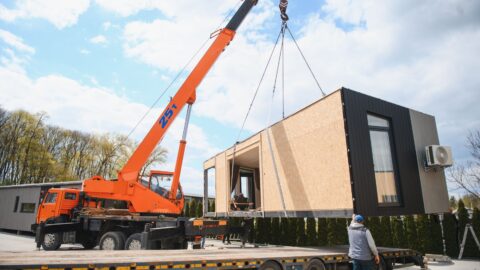
The Dutch building materials sector faces the same risk. The industrialization and sustainability of the construction industry are continuing, with or without the established industry. The first factories in Poland and Lithuania that produce complete, sustainable building components and homes for our market are already up and running. Anyone who focuses their energy primarily on influencing the rules of the game runs the risk of eventually losing their own market.
The most recent example is the lobbying surrounding the WLC-GWP, the new European system we’ll use to calculate the climate impact of buildings over their entire life cycle and to set standards for them starting in 2030. The established building materials industry is primarily trying to influence the way its products are assessed.
Ceramics
The ceramics industry, in particular, takes this to extremes. According to the trade association KNB, its preferred version of the new calculation method leads to cheaper housing and greater CO₂ reductions. A bold conclusion with no supporting evidence. What the KNB fails to mention is that its preferred variant favors CO₂-intensive materials, because potential environmental benefits from reuse and recycling over a fifty-year period can already be significantly factored into the building’s CO₂ footprint at the time of construction.
The umbrella organization for the building materials industry, NVTB, also emphasizes in a recent publication the importance of a comprehensive life-cycle assessment. Previously, the same organization labeled an additional accounting of biogenic carbon storage within the existing framework as “fictitious gains” and criticized the emphasis on short-term CO₂ reduction.
The time factor
The debate over the calculation method centers primarily on the time factor. The CO₂ emitted today during the production of bricks, concrete, and steel contributes directly to climate change, while the presumed benefits of recycling in fifty years’ time remain to be seen. Conversely, trees and crops remove CO₂ from the atmosphere, which can remain stored for decades when used in buildings—precisely during the period when we need to drastically limit climate change.
The debate has now reached the House of Representatives. In early July, JA21 submitted a motion to give greater weight in the WLC-GWP to materials with a technical lifespan of more than fifty years. That motion was narrowly rejected. The European 50-year assessment period is presented as putting long-lasting materials at a disadvantage, even though Europe explicitly states that this calculation period says nothing about a building’s actual lifespan. The familiar argument about national standards is also being trotted out again. However, the discussion here is about how we calculate climate impact, not about setting higher standards.
Housing construction costs
And, of course, rising housing construction costs are always brought up as an argument. Last year, the proposed tightening of the MPG standards for residential buildings was scrapped due to potential cost increases. Now it is being suggested once again that a more effective calculation method will make homes more expensive, even though the ministry actually intends to set the initial WLC-GWP thresholds in such a way that construction costs do not rise significantly. A different calculation method does not automatically make a home more expensive. It primarily changes which materials come out more favorably in the calculation when a standard is set.
Through trade associations, standards committees, and political lobbying, the established industry exerts significant influence over the rules used to assess its own performance—and, by extension, over the competitive landscape between existing products and new solutions. That is precisely why it is so important that a measurement method reflects the actual climate impact as accurately as possible. Otherwise, we reward companies that maintain their existing production processes and penalize those that invest in innovation.
Continuing to protect CO₂-intensive production processes is morally indefensible. It would therefore be to the credit of the Dutch building materials industry if it devoted at least as much energy to innovating its products and production processes as it does to influencing the calculation rules. International competitors aren’t going to wait until we’re satisfied with the results of our calculations.
About the “Perspectives” section
In *Zichtlijnen*, author Jan Willem van de Groep aims to take the conversation about innovation in construction a step further—not by shouting louder, but by looking more closely. He writes about what’s happening beneath the surface: the assumptions, the systems, and the choices that determine what we build and why. His ambition is to provide direction to a sector that is constantly in transition but, unwittingly, still too often thinks in old patterns. What systems are still holding back a construction industry that wants to move faster, can be more affordable, and must be more future-proof?
Read previous episodes of Zichtlijnen here.