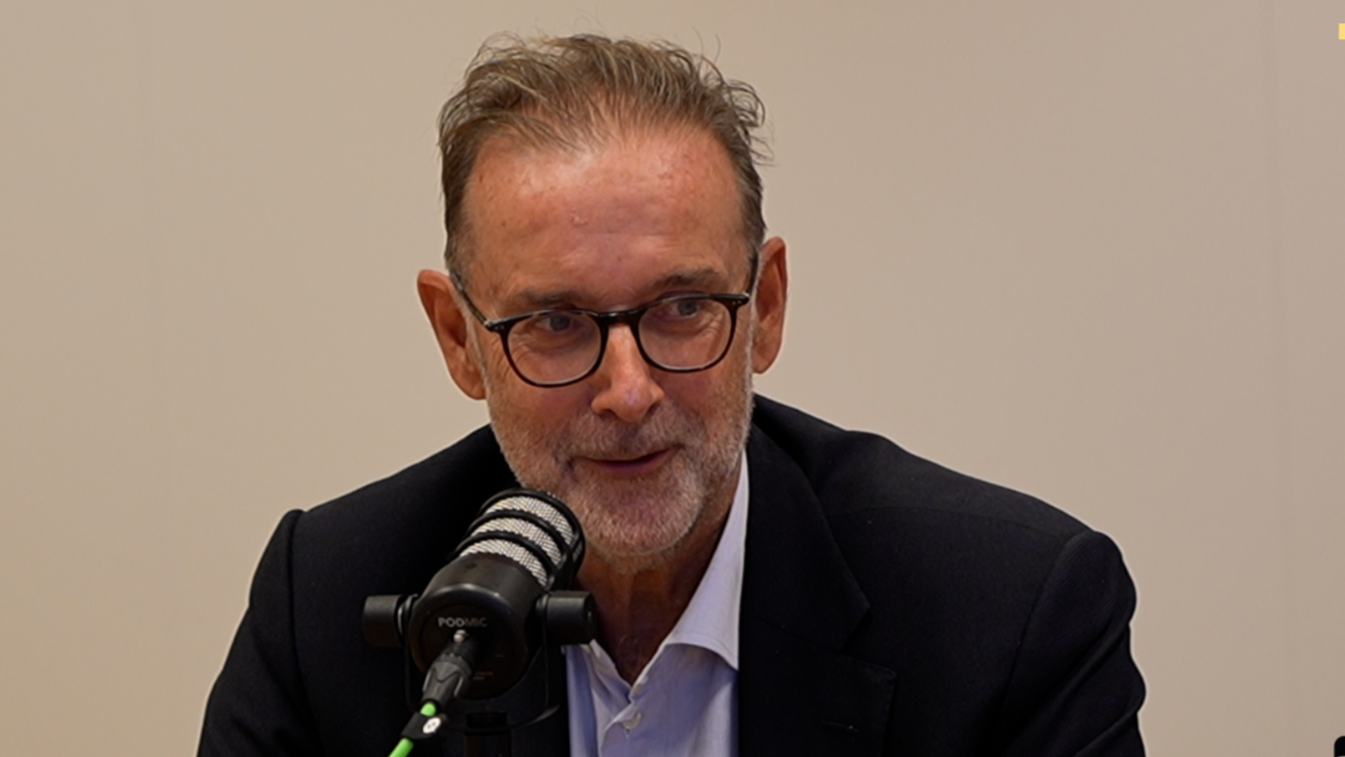
The decision to shut down the Ministry of Housing, Spatial Planning, and the Environment (VROM) in 2010 was “not a strange move,” but it was one that was implemented “too abruptly.” That’s according to outgoing top civil servant Chris Kuijpers in the latest episode of the Bureau Stoer podcast. “We should have kept more of a financial cushion.”
Chris Kuijpers will step down as Director General of Public Housing and Construction on July 1, 2027. By then, he will have served nearly 20 years as a top civil servant in the fields of housing and urban planning.
In an in-depth interview with the Bureau Stoer podcast, Kuijpers candidly looks back on his career, during which he worked with some twenty ministers.
“My favorites? Ministers who are driven and get things done. I really enjoyed working with Hugo de Jonge, but also with Sharon Dijksma and the current minister, for example—they’re all slightly different types,” says Kuijpers.
Learn from the past
On the eve of major budget cuts by the current cabinet, the top official warns against overly drastic measures. “It’s easier to dismantle something than to build it up,” he says. “We’re back on track a bit with public housing now, but just look at how long that took.”
According to him, lessons can be learned from the complete dismantling of the Ministry of Housing, Spatial Planning, and the Environment (VROM) in 2010. “Was that wise? At the time, it wasn’t an unusual move; we had little say in the matter and hardly any financial resources. Moreover, it was a time of crisis, and there was hardly any demand for housing.”
Too steep
However, Kuijpers believes the cuts were too drastic. “As a result, a great deal of expertise was lost. The consequence? When housing construction became necessary again, it took too long to get back on track. We should have kept more reserves.”
Although it no longer included the “M” for Environment, the Ministry of Housing, Spatial Planning, and the Environment (VRO) made its comeback in early 2022. Kuijpers notes that things are moving in the right direction, but he also knows that the housing shortage remains a reality. Still, he is optimistic.
A different tune in Munich
“The good news is that we have locations and an action plan. But we’re still a long way from being there. Our recent visit (the minister, market representatives, and the five major cities) to Expo Real in Munich was important. Right now, we’re not the favorite (read: not the most attractive country for investing in housing), but we did present a different perspective there. I understand that they won’t be lining up at the gates tomorrow to invest money, but the groundwork has been laid.”
He calls on builders to keep innovating and on aldermen to be bold. “What we have now is space, but we lack concrete plans that have been approved. That’s the biggest concern.”
Vinex 3.0
In his final months in office, the top civil servant wants to help make public-private partnerships more concrete. His ambition is to give “the large-scale housing development sites”—which the cabinet is now fully committed to—a “warm and loving narrative.” “That’s where all the goals come together. It’s actually a kind of Vinex 3.0.”
Kuijpers also addresses recent statements by Peter Boelhouwer, professor of housing systems at Delft University of Technology. On the “Bureau Stoer” program last week, Boelhouwer said that the housing production target should be raised to 120,000 new homes per year. Kuijpers considers that unwise.
Higher Ambition
“120,000 homes? Many people are already saying we should stop talking about those 100,000 homes per year. Personally, I think it’s good to keep up the pressure, but calling for 120,000 now will only unsettle people. Everyone in the sector actually wants stability and predictability.”
He is proud of the so-called Key Projects in station areas—all but one of which have been completed—the Quality of Life and Safety program, and the efforts to make the existing built environment more sustainable. “We’ve really made a lot of progress in those areas over the past twenty years.”
Humor
On July 1, Kuijpers will close the ministry door behind him with his head held high. How did he manage to stick it out for 20 years? “Hahaha. I wonder that myself… I think by staying optimistic and not taking it all too seriously. And with a little humor.”
Curious about the full interview with Chris Kuijpers? Listen to Bureau Stoer.