In my recent columns, I’ve voiced sharp criticism. But if you were to ask me to give some positive examples, you’d put me on the spot. Because, in fact, there aren’t any—at most, a few things that are moving in the right direction and reducing the environmental impact. But things that make a net positive contribution?
We’re living far beyond our means. No matter how well we do, we’re using far more energy and resources than the world can continue to provide in the long run. Not to mention that the world itself is collapsing as a result of all these interventions and changes. Just look at what happened recently in Nepal. Did you know there are about 50,000 glaciers in the Himalayas? So we’re going to see quite a few of them collapse in the near future, resulting in the inevitable disasters. And that’s not just happening far away—it’s happening in the Alps, too.
So, in fact, if we really want to do something positive, we shouldn’t build any more, we shouldn’t use any more technology, but above all, we need to drastically reduce our energy and material consumption. Even if we wanted to do everything with renewable resources, the world still can’t produce enough. After all, there are 8 billion of us, right? And we all want—rightfully so—to maintain our standard of living.
So what, then? What’s positive? If we stopped building more than five stories high, or stopped tearing down buildings, that alone would be positive. Well, at least it would be sensible—and certainly not negative. So what is…? What’s positive when we’re talking about construction?
How about this? What if all retirees were to buy a vacant house in France for a few euros and renovate it? And then actually move in and live there. That seems very effective to me—and perhaps even positive. It’s a win-win situation: the quality of life in rural France would improve due to fewer vacant properties, and the housing shortage in the Netherlands would disappear like snow in the sun. Plus, it would significantly reduce our environmental impact since we wouldn’t have to build here!
Why not set up an incentive program for that? A relocation bonus. Just an idea. Although it’s actually nothing new. Drees already said it in 1950: “Some of our people must dare to seek their future in areas larger than their own country.” And Queen Wilhelmina also weighed in that same year: “Rapid population growth and the limited amount of available land require vigorous promotion of emigration.” Ultimately, half a million Dutch people emigrated back then. Let’s just do it again, I’d say.
Well, at least there’s one “positive” initiative here at home: I’ve been saying for years that we shouldn’t renovate and insulate the entire house. It’s not cold—or hot—365 days a year. We need to learn to live with the climate again—and with the availability of energy. We shouldn’t try to keep the entire interior of a house at twenty degrees, 24 hours a day, 365 days a year, and pull out all the technological stops to do so. Before the gas tap was turned on in the 1960s, we didn’t have that either.
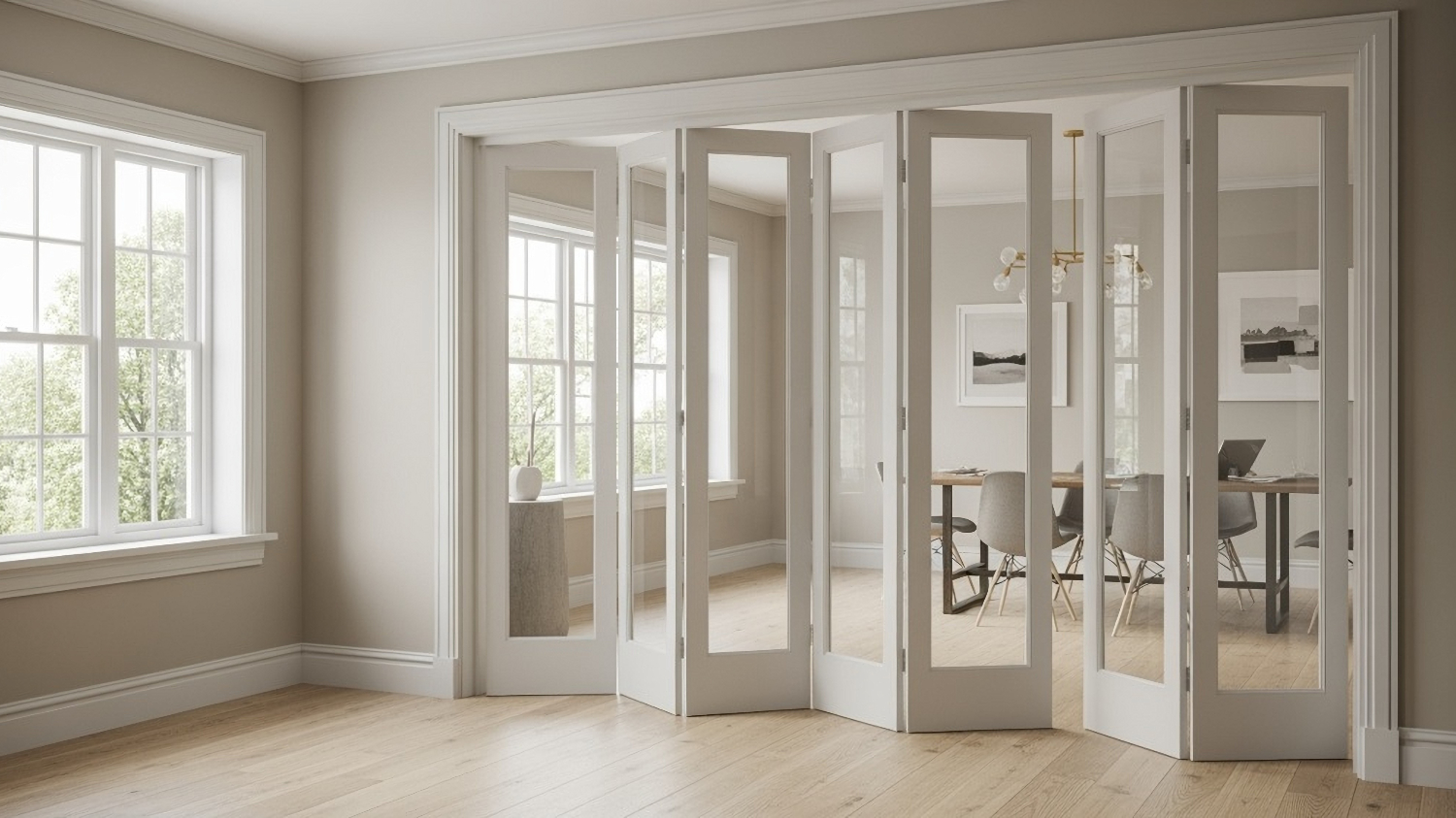
Now that tap has been turned off again. And we have to adapt. When it’s cold, we retreat to a single room that we keep warm. So, compartmentalizing instead of bundling up. It takes some getting used to, but what’s wrong with that? I’ve had sliding doors installed in the living room again, so we can make the space smaller and heat only part of it. We’ve insulated the ceiling there. That alone saves 40 percent on energy right away.
And sure enough: a housing authority has put that principle into practice! In Enschede, homes have been renovated according to that principle by the Domijn housing authority, in collaboration with Saxion. The results are “better than expected.” So: let’s all start “thermal compartmentalizing”!
By the way, as for those sliding doors: some improvements are definitely needed. They aren’t double-paned yet, and they aren’t draft-proof: there’s (unfortunately, once again) a market for this….
About the author of Post-Fossil Construction
Ronald Rovers is an ex-professor, physical fundamentalist, future thinker and nowadays author. He is permanently searching for the ultimate sustainable physical balance on earth, without depleting fossil resources. Productive Land he calls "our real capital, for food energy water and material. And that requires us to live "vegetarian," and therefore to build vegetarian.
Read previously published columns in this section here