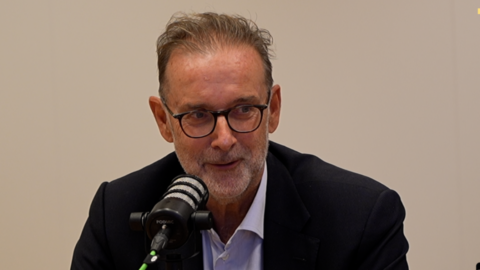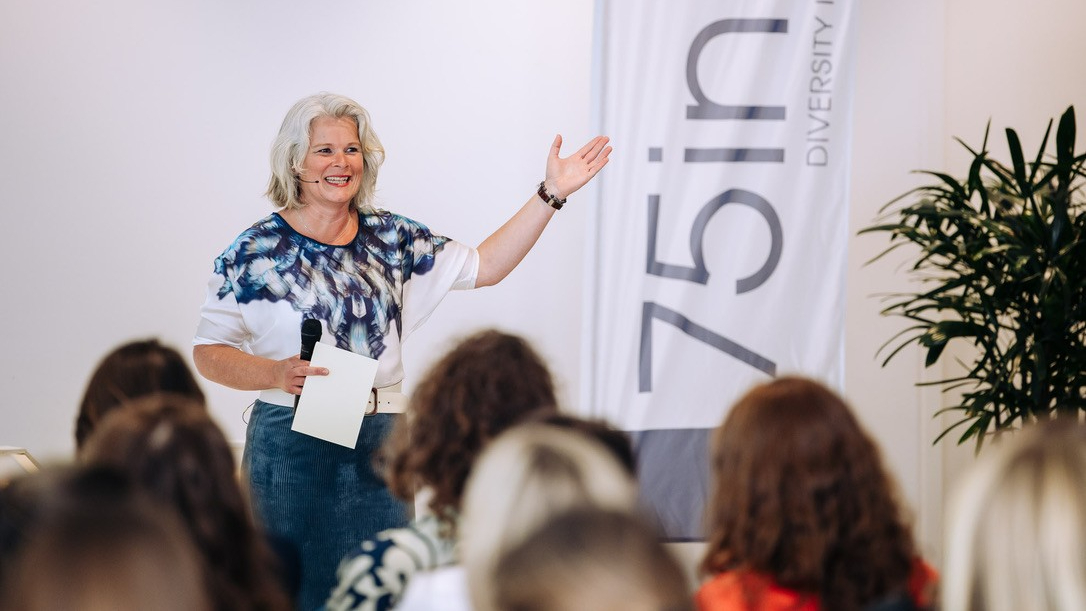
The proportion of women in the construction and engineering sectors must increase rapidly if we are to meet our energy and sustainability goals. That’s according to Martine Witteveen, who works toward this goal every day as a program manager at 75inQ. “In the Netherlands, we’ve dropped to 15 percent, which is lower than the European average. So it’s all hands on deck.”
The construction and energy sectors are both undergoing major transitions. Innovations and developments are following one another in rapid succession, and the pace is accelerating and scaling up. At the same time, Martine Witteveen points out that women—across all technical fields—are in the minority and that there are significant labor shortages. She sees these as challenges. Or rather: “Opportunities.” An interview.
75inQ was founded seven years ago. From day one, you’ve been committed to an inclusive energy sector. How do you go about that?
“We’re linking two Sustainable Development Goals (abbreviated as SDGs) together. Ensuring access to affordable and sustainable energy (Goal 7) and working toward gender equality (Goal 5). In doing so, we’re trying to kill two birds with one stone.”
How big is the challenge?
“In the boardrooms of companies operating in the energy sector, the table is dominated by male executives. That in itself is a challenge, because the consequences of energy poverty are borne primarily by women. In addition, the labor shortage in the energy sector is growing, and labor force participation is lagging.”
She continues: “If we want to meet the goals of the Paris Agreement and reduce CO2 emissions, we need innovation, drive, and speed. In other words: all hands on deck. So make way for women, from mechanics to executives.”
What is the gender ratio in the energy sector?
“At 75inQ, we’ve been focusing on the energy sector for about seven years now, and there’s still a critical need for it. The percentage of women in the energy transition sector stands at 22 percent across Europe; in the Netherlands, it’s even lower, having dropped to 15 percent. That number needs to go up.”“
Is there already a sufficient sense of urgency about this?
“Absolutely. The key is to retain the women who already work in the energy sector, encourage career advancement, and promote the entry of new, young women. Women are also underrepresented in the construction industry, and they could and should play a much larger role. It’s now well known that a healthy mix of men and women leads to better results.”
Why isn’t that mix in place yet?
“The energy and construction sectors have traditionally been organized in a conventional way. The influx of women has always been low. But times are changing, so a transition is underway in that area as well. There is currently a lot of focus on women in engineering. Companies and organizations can learn from and support one another in this regard. We collaborate with a wide range of partners. VHTO, the center of expertise that organizes the annual Girls’ Day, among other initiatives, is one of them.”
What specific lessons learned can be applied to the construction sector?
“Many job postings and employment conditions we come across in the energy sector assume a 40-hour workweek, availability at all times, and a Class B driver’s license. If you want to attract other groups and foster greater diversity, you need to identify what’s required to do so and take that into account when recruiting. That’s called equity.” At the same time, I want to emphasize that o“Our community of experienced women in the energy sector is growing. We meet to network and share knowledge at events, training sessions, and other activities. That’s how we reach so many women.”
What’s the next event you’re organizing?
“That’s the ‘Women Leading the Energy Transition’ conference on November 17 in the Aula at TU Delft. The theme is ‘Energizing Justice,’ with the central question: How would Lady Justice view the energy transition? We’ll explore what a just energy transition truly means from various perspectives. After all, what is the right to affordable and sustainable energy? Do laws and regulations contribute to fair outcomes, and if so, how? And how do we create equal opportunities for women and men in the energy transition labor market? One of the keynote speakers is Joris Luyendijk. The goal of the event is to bring together different perspectives and translate the insights gained into concrete change.”
And you’re here at DigiBouw…
“That’s right. DigiBouw is the construction industry’s digitalization event for design, construction, and engineering professionals. 75inQ is hosting the session: ‘What Can We Learn from the Energy Transition?’. There, we’ll discuss, among other things, our experiences with the energy transition and how that can help drive digitalization in the construction industry. In the session, we’ll explain how to leverage “Accelerates the transition through inclusive leadership, diversity, and decision-making.”
When are you happy?
“If we can inspire the participants at these events and they go home with new insights, it would be great if they shared what they’ve heard within their own organizations and companies. Because every transition needs support.”
Read all about the Women Leading the Energy conference on November 17 at TU Delft here. Order your ticket here.
Digibouw will take place at the Jaarbeurs on Wednesday, November 25, and Thursday, November 26. Click here for the full program. Want to register right away? Click here.