"Real pioneering work," is how Jan Willem van de Groep calls the work done by construction company Dijkstra Draisma of Dokkum. They have seriously invested in a substantiated equivalent solution and they deserve credit for that. "This is what change looks like in practice."
Equivalence is an intriguing concept in building regulations. It has been around for years, is neatly described and is regularly mentioned from the government as a way to make room for innovative solutions. At the same time, it is a route that few parties really dare to take. Not because they do not believe in the solution, but because success is never guaranteed in advance.
In essence, equivalence says something simple. You don't have to comply exactly with the prescribed computational route, as long as you can plausibly demonstrate that your solution performs the same or better in practice. This does not make it an escape clause, but an instrument to make the intent of regulations central. And that is precisely where it falters. Because what feels technically logical is often legally and administratively tense.
That is certainly true with biobased insulation. Not because those materials are deficient, but because their performance does not always fit neatly within highly standardized calculation methods. The reflex then quickly becomes that biobased construction must, by definition, be thicker. That image is persistent, but incorrect. Thickness is not a law of nature, it is the consequence of how we calculate. And that is exactly where equivalence comes in.
Those who choose the route of equivalence are not choosing convenience. Every permit application requires substantive review. Municipalities must understand, weigh and dare to approve the substantiation. There is no national registration, no central permitting club you go by once. Every time, the conversation has to be had. That makes equivalence labor-intensive and uncertain, both for builders and for competent authorities.
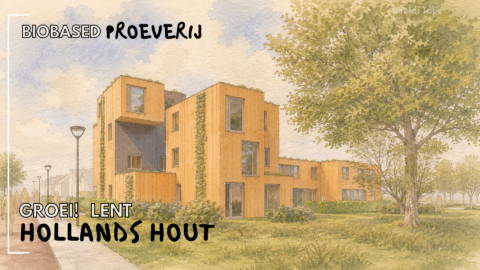
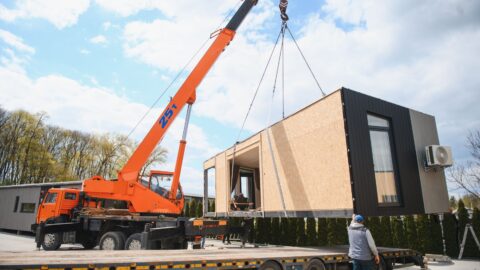
That is precisely why the credits deserve a clear place here. Construction company Dijkstra Draisma of Dokkum has chosen to take this risk. Not by calling the standard into question, but by seriously investing in a substantiated equivalent solution. The result is that it has been demonstrated to several municipalities, with support from the government, that thinner construction with bio-based insulation is indeed possible. That is no small step. That is pioneering work.
The involvement of the Ministry of Housing and Spatial Planning was essential here. Not as a client, but as a thinking party that helped municipalities take this route responsibly. This turned equivalence from an abstract concept into an applicable instrument. And that is exactly where the breakthrough is.
That doesn't mean equivalence is the ideal solution. On the contrary. The current system asks a lot of municipalities and inevitably leads to differences in pace and assessment. A national admission structure with registration of validated solutions would make the playing field fairer and more efficient. Then there would be no need to reinvent the wheel each time and trust would develop more quickly.
Until then, guidance is crucial. By involving experts, by sharing knowledge and by supporting municipalities in their role. This is happening now. And that lowers the threshold for others to follow.
Meanwhile, the most important message should not be lost. Biobased insulation doesn't have to be thicker. That idea can be binned. What was shown in Dokkum is that the system offers room to build differently, provided you are willing to use that room. Dokkum's rightness lies not only in a successful case study, but in proving that the limitations we so often invoke are not always technical. Sometimes they are primarily institutional.
And that is precisely why this step deserves more than a footnote. This is what change looks like in practice. Not perfect, not without risk, but with results.
In Dokkum, by the way, they have many more useful ideas. For example, to solve grid congestion. Listen to those people because they are usually right at the point where practical experience meets systems thinking!
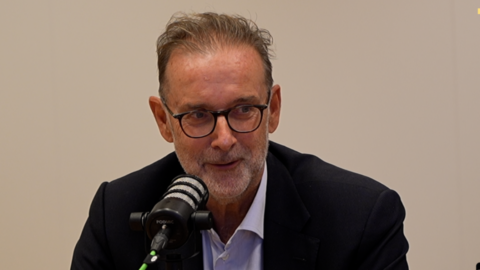
This article was written by Jan Willem van de Groep, programmer, future thinker and publicist. He is known, among other things, for the government program Building Balance.
Want to respond?
Would you like to comment on this story? Or would you like to share something here? Send an email to Thomas van Belzen, editor-in-chief of Bouw & Installatie, at Thomas.van.belzen@jaarbeurs.nl
-
t
-
-
t
- Previous columns by Jan Willem van de Groep