Environmental regulations act like shrink wrap for biobased homes and factory-built houses. That’s what BAM executive Viviane Regout said during a working visit by Queen Máxima and Minister Boekholt-O’Sullivan to a biobased housing project in Doetinchem. She is also concerned about the “advisory” role of the building code.
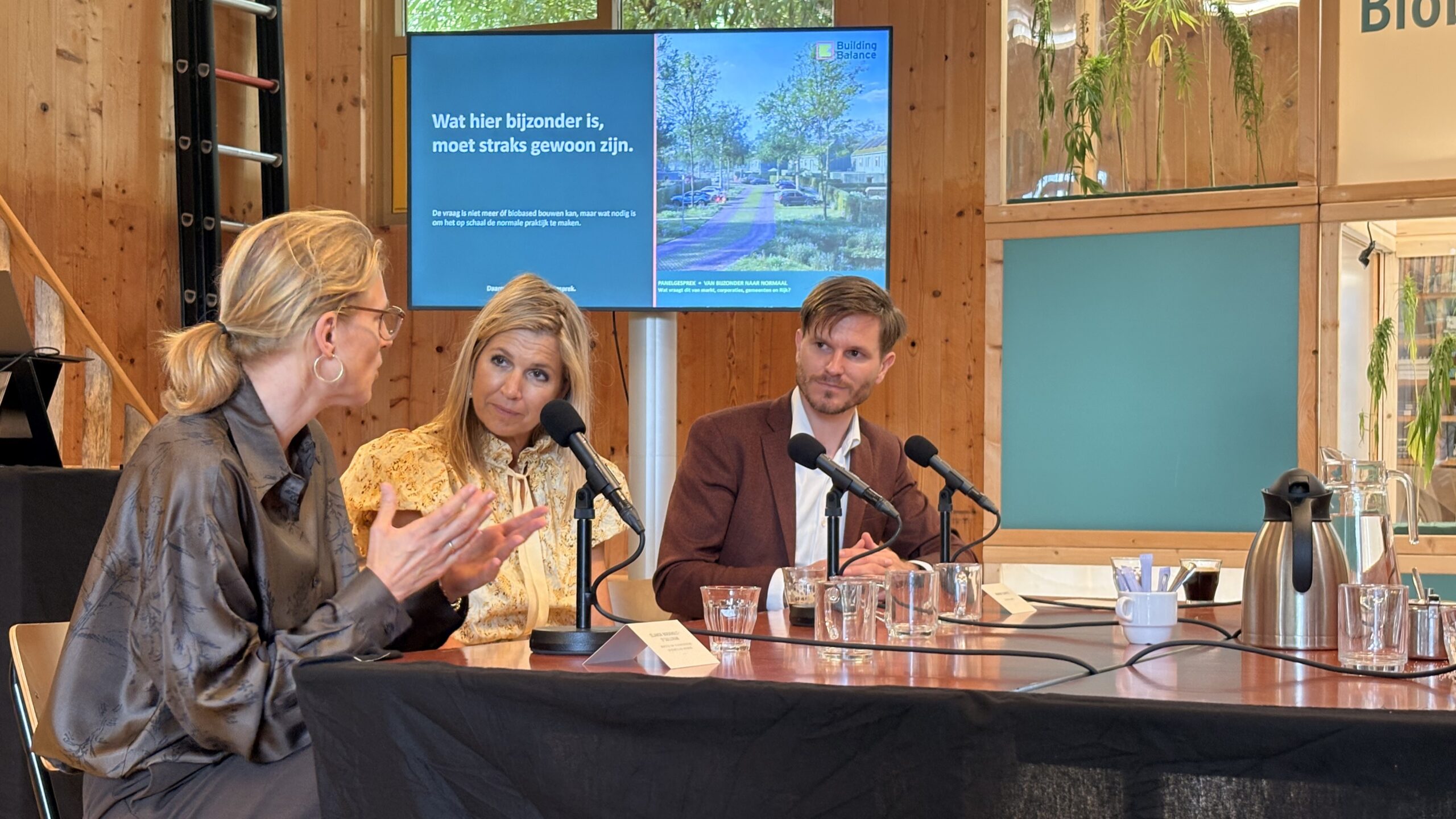
An hour ago, she was already riding a tractor; she then received an extensive tour (with an audience) of the Weidewald project, and now all eyes are on Queen Máxima during a Building Balance roundtable discussion. The discussion centers on the Achilles’ heel of biobased construction: the first seeds of a new construction culture have been planted, but how can we accelerate its growth?
Máxima is curious. “How many homes do you need to sell before the price becomes more attractive?” she asks in a wooden school building in Doetinchem. And she probes further about BAM’s Flow wooden factory-built home. “What hurdles are still in the way? And surely its energy performance is very good?” No. The queen finds it hard to hide her enthusiasm for biobased construction.
Housing Minister Boekholt-O’Sullivan is a bit more reserved. She, too, is listening intently, but the woman who actually has the power to allocate resources is more sparing with her questions—and her enthusiasm for building with wood, hemp, and flax. Her main goal is to build as many homes as possible. And homes that are affordable, she emphasizes.
From-Field-to-Building Generation
Does the former top official at the Ministry of Defense have no interest at all in sustainable construction? Of course she does. And she’s more than willing to help “the from-land-to-building generation,” but Building Balance—and everyone who supports biobased construction—needs to be more specific about how and with what.
“Understandable,” reflects Viviane Regout shortly after the royal working visit organized by Building Balance. “The more concrete, the better. That’s what I always tell everyone around me.”
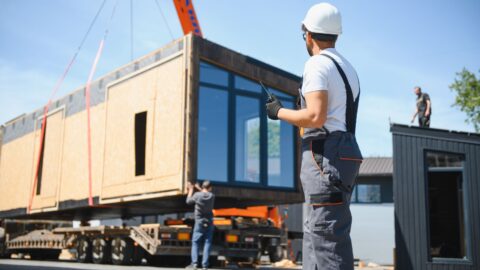
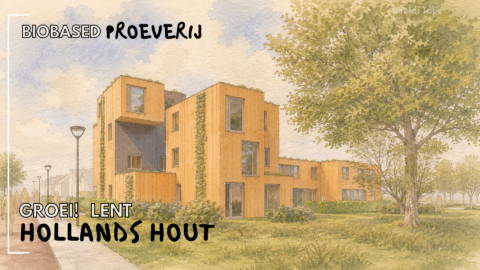
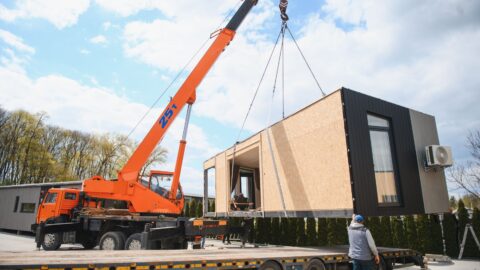
Regout is an executive director at BAM Residential. She no longer needs convincing about the benefits of building with wood. In fact, building wood-frame, ground-level homes is at the heart of BAM’s strategy. The Weidewald project in Doetinchem is the fourth to feature the so-called “Flow Homes.” “The end result is fantastic,” says the top executive of the Netherlands’ largest construction company, “but it was quite a labor of love.”
“Everything’s different—it’s absolutely wonderful.”
Rens Steintjes nods; he knows exactly what she means. As the alderman for urban planning in the municipality of Doetinchem, he was closely involved in the figuratively and literally green housing project. “That was absolutely wonderful,” he says, looking back on that experience. “This project was completely different from what we’re used to. Does it leave us wanting more? Yes. At the Spoorzone a little further down the road—a much larger development than this one—we’d like to continue using this approach.”
Regout wants that too, but stresses that additional support from the minister would be desirable. The entrepreneur is calling for more flexibility in environmental plans so that they allow more room for concept homes. “Right now, an environmental plan is like shrink wrap. Builders and developers can’t work with that.”
Industrial builders also grumble and complain about building code guidelines that reportedly vary from municipality to municipality. As a result, they have to keep adapting their prefabricated homes—which work best with standard dimensions—time and time again. That costs time, money, and causes frustration.
Building Code Debate
The minister doesn’t see the problem. “The building codes office merely offers advice,” she says. Regout: “That may well be true. But I don’t often see the building codes office’s advice being disregarded.”
The director of BAM is not alone in her criticism. Saar Veneman, managing director at the housing corporation Sité Woondiensten, also believes that the government should do more to promote biobased construction.
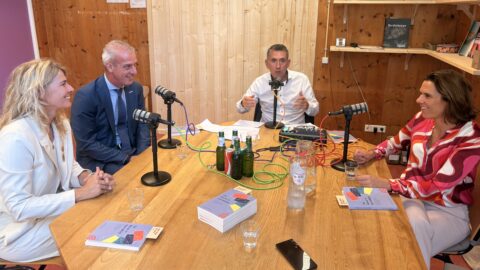
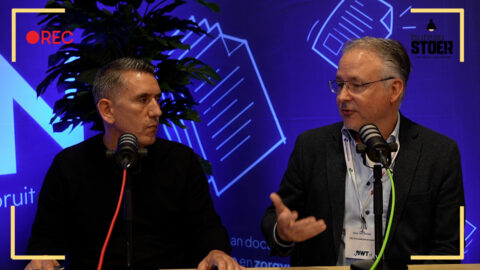
From left to right: Saar Veneman, Rens Steintjes, Thomas van Belzen, and Viviane Regout during the recording of the Bureau Stoer podcast.
Veneman manages 8,000 social housing units. Over the next 10 years, there are plans to build another 1,000 units. “How many of those will be biobased? We’d like to, but it depends on whether the terms are attractive enough. I understand that the minister is focusing on numbers and affordability, but we mustn’t lose sight of the quality of housing.”
Máxima: From Concrete to Wood
Back to Máxima. Can she give biobased construction a boost? Councilwoman Steintjes thinks so. “Her Majesty has visited our municipality before. Today, I can clearly see the tremendous commitment and in-depth knowledge she brings to the table and demonstrates to those around her. There’s no doubt that this will help us gain a stronger foothold.”
Regout of BAM agrees, because no matter how appealing it may be, biobased construction won’t happen on its own by 2026. “Can Queen Máxima make biobased construction take off? Her interest in this project is wonderful, and we desperately need it as we transition from brick and concrete to biobased materials,” the executive concludes.
Curious about the whole debate? Listen to episode 45 of “Bureau Stoer” here.