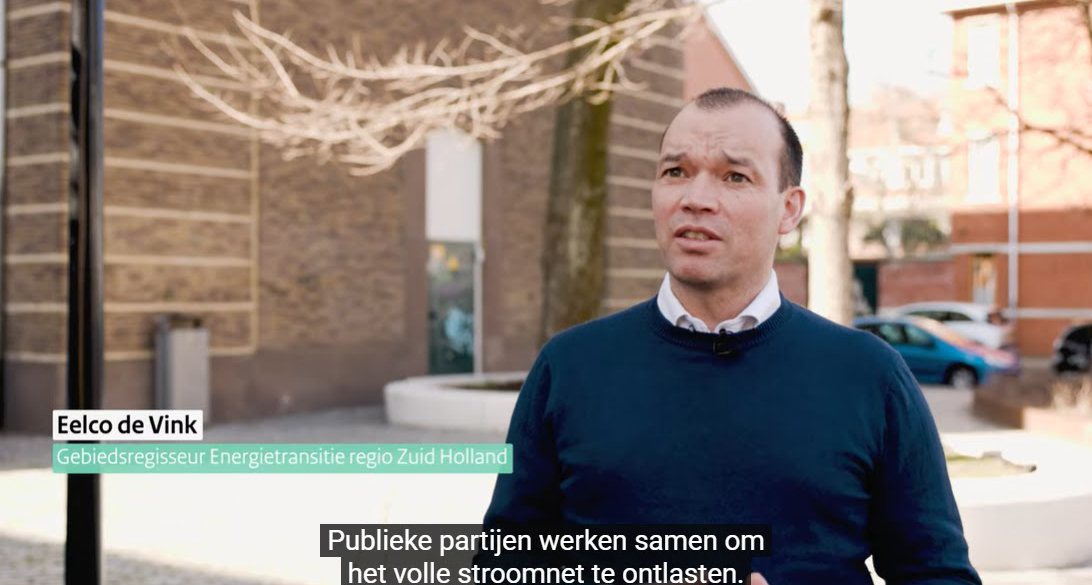
The State, Province of South Holland, municipality of The Hague, HTM and the State Property Company are going to avoid rush hour traffic on the power grid in the city of The Hague. In doing so, they are investigating, among other things, delayed charging of electric cars (before 16:00 or after 21:00), smarter control of buildings and flexible storage capacity of electricity (such as batteries). The Hague consists largely of government buildings, and these can make a significant contribution to keeping The Hague's power grid stable.
The tightness on The Hague's power grid has come about due to the increase in power consumption from heat pumps, charging stations and electric cooking. Until 2033, The Hague must use electricity economically to ensure that households and large users can continue to benefit from a stable power supply. In the coming years, Stedin and TenneT will invest at least €300 million to expand The Hague's electricity grid and make it ready for the future. In addition, it is important to use the power grid as effectively as possible by spreading power consumption over the day as much as possible.
Avoiding rush hour means more room on grid for homes
Parties sign the Flexvermogen Intentieovereenkomst today in the presence of outgoing Minister Sophie Hermans of Climate and Green Growth at the Haagse Hogeschool. By avoiding the rush hour on the power grid, the power grid can be used much better. That means the grid can be kept reliable and more space is created, for housing, for example.
Creative solutions to make better use of the power grid
Energierijk Den Haag, in which Rijksvastgoedbedrijf, gemeente Den Haag and provincie Den Haag are working together on energy transition and energy independence, are tackling the peaks in power consumption ('peakshaving'), investigating possibilities to charge cars outside peak times of energy consumption and will control energy installations of buildings smarter. They will also investigate the placement of flexible power, such as batteries for buildings.
Public transport company HTM is also exploring ways to reduce grid congestion, for example by connecting batteries to the overhead power grid to store power in them, and by using less power itself.
In cooperation with Stedin, these measures will help ensure that the power grid in The Hague remains stable in the coming years until the final expansion of the power grid. The collaboration came about at the initiative of grid operator Stedin and Energierijk Den Haag.
Municipality of The Hague supports with accelerated permitting
In the coming years, two new main distribution stations with 11 kilometers of cables, and at least 500 medium-voltage rooms, will be built with the necessary cabling. This is not easy in a city where underground space is already overcrowded with cables and pipes. A special task force at the municipality is speeding up permit procedures and finding space for stations and cables.

This is an article from Construction and Installation Hub. Want to keep up with all the news from the construction and installation industry? Then take a look at the hub and sign up for the online community.
↗