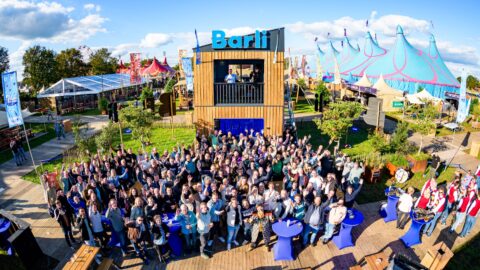
Roelof Vossebeld of Strobox is beaming in his section of the Biobased Pavilion on Tuesday morning. "It's great to be able to show the possibilities of biobased building with different parties to the general public," he says.
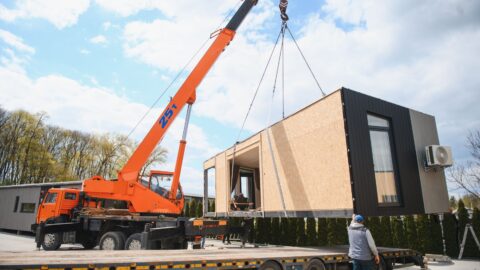
And the interest is great, it's a buzz in the biobased corner of Hall 8. There stands a group of exhibitors with a common mission: to draw attention to biobased building materials. Strobox, which makes building elements (boxes) from fire-resistant, breathable and FSC-certified wood and then fills them with straw from local farmers, is one of those passionate companies. The company recently won the Deventer Entrepreneur Election in the Global Goals category.
Vossebeld: "The jury report mentioned that our solution makes the world more sustainable, fairer and greener. I think all my fellow competitors here in this pavilion are working on that in their own way. We notice that the construction world is just about ready to start using more biobased materials. All the materials you see here consist of raw materials that grow back time and again, how great is that? It also cuts both ways. It gives farmers the opportunity to switch to another crop, with guaranteed sales. And it allows construction to continue in a circular and sustainable way. From land to premises, in other words.'
Extremely strong
The company HempWood is showing several things in its booth. The company turns the raw material hemp into an alternative to wood. In about five months, plants about a meter tall grow from the hemp seeds. After harvesting, the plants go to a factory where the fibers are pulled apart, treated, dried and pressed into molds. The final product is 20 times harder than oak. Compare the growing time of hemp to that of an oak tree, and it is obvious that hemp is a great raw material for a rock-solid biobased building material.
Residual streams
Many people have heard of straw and hemp by now; the raw material mycelium is relatively unknown and rather appeals to the imagination. Mycelium is a network of super-thin fungal threads that belong to mushrooms and fungi in nature. By growing those fungal threads on a nutrient medium in a controlled environment, they can be harvested and processed into biobased building materials. Exhibitor FC-Insulation grows mycelium on residual streams from food chains, forestry and horticulture and turns them into insulation boards, among other things. Those plates store CO₂ and thus make a positive contribution to emissions.
Impressed
Compost Board is another exhibitor in the Biobased Pavilion. MBO students feel the samples of pressed fiber. 'Rock hard!", says one. 'Yeah right, what's this made of?" asks another. 'It's hemp fiber from Brabant, flax fiber from Zeeland, and fiber from bell pepper plants from South Holland,' they are told. These builders of the future are visibly impressed. For them, working with these kinds of materials will become increasingly commonplace in the years to come. Both the supply of bio-based building materials is growing, and the realization that this is the way to drastically reduce the sector's CO₂ emissions.

This is an article from Construction and Installation Hub. Want to keep up with all the news from the construction and installation industry? Then take a look at the hub and sign up for the online community.
↗