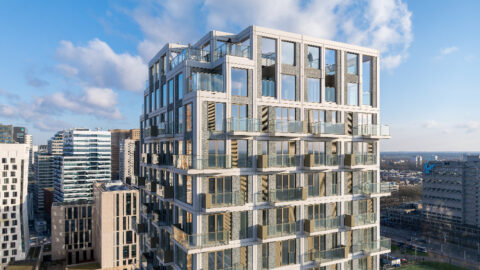
Build ten new cities in the existing city instead of in green pastures. That is what architect Reimer von Meding urges D66, CDA and VVD to do. His thesis: compacting is realistic, goes twice as fast as building in the green, and for society it is much cheaper.
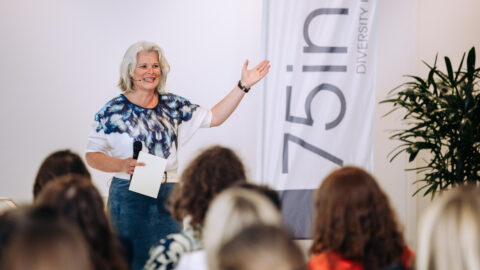
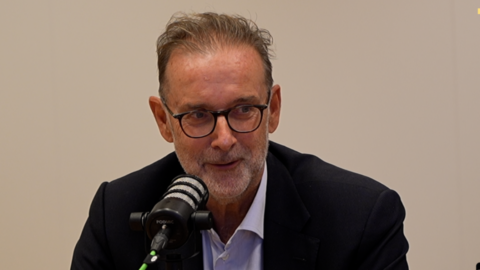
Reimar is managing director at KAW, one of the largest architecture firms in the Netherlands. Since 2012, he has profiled himself as an 'action-tect' and on several occasions he and his firms have made studies to settle 'persistent' misconceptions about building within the existing city.
With a letter to Rob Jetten, party leader of D66, he again calls attention to densification. In the letter, Von Meding responds to the plan of the country's largest political party to build ten new cities in ten new places. The architect is no fan of this and comes up with a counterproposal: "The space for new cities is precisely where you least expect it: in the cities that are already built. And it is very realistic that we are going to use this space," Von Meding writes in a letter to Jetten.
In his letter, the outspoken designer points to the potential of ten "underutilized" spaces in buildings and existing cities. Collectively, these would have hidden potential for the construction of hundreds of thousands of additional homes. As examples, he cites converting garage boxes, transforming dark corners in cities that are mostly food for squalor and splitting up corner houses.
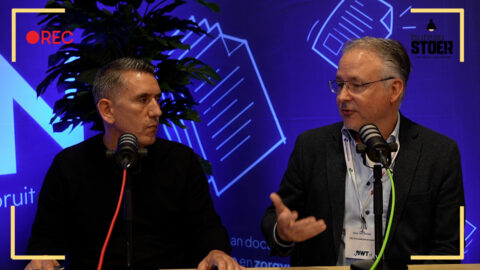
Whereas the perception is that building outside the city would be faster and more sustainable, nothing could be further from the truth, according to the German-born architect. A new study "Room for the Ditch," would even show that densification contributes to the water-holding capacity of cities. In addition, according to him, building in the city is faster than outside it. "Almost twice as fast even, although inner-city building still takes 10 years of preparation," Von Meding says in an interview about his letter to Jetten in the latest episode of the podcast Bureau Stoer.
0.3 percent
Attention to topping, splitting and inner-city construction increased significantly over the past year. Yet it is still barely happening, according to the architect. "I estimate only 0.3 percent. Why is that? It's ignorance."
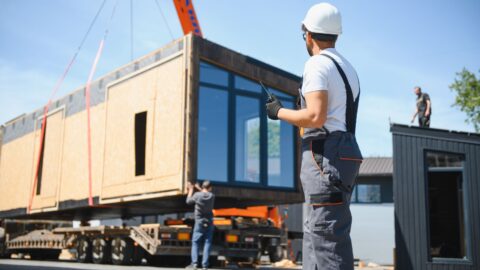
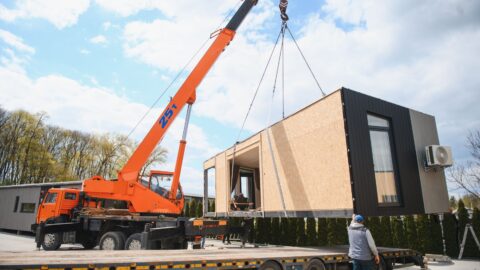
Another problem is that inner-city construction is not a fat lot, Von Meding acknowledges. He therefore urges support from The Hague and some sort of national densification plan. Construction-wise, he says, there are no obstacles. He does challenge market parties to invest in factories that can produce 2D elements for the smarter use of existing city and building. Van der Hulst Bouwbedrijf from Lisse is currently building a factory which seems to match Von Meding's expectations.
According to him, it is nonsense that inner-city building cannot be done out. His firm itself has never taken a step outside the city. "With KAW, we are celebrating our 50th anniversary this year. We are one of the largest architecture firms in the Netherlands, but we have never built on the green meadow. We successful with that. So that shows that it can be done."
Million letters
In Bureau Stoer, he also gives examples. For example, he mentions a project in Vlaardingen. "Now that neighborhood consists of 700 housing units owned by a corporation. Soon there will be 1,000. That means a 30 percent increase and the public space there also increases."
D66, VVD and the CDA are in busy discussions to form a cabinet. Von Meding hopes the three parties will use his letter to come up with good solutions to solve the housing shortage. He realizes he is not the only letter writer in formation time. "I think Jetten gets a million letters," he says jokingly in the latest episode of the podcast Bureau Stoer. "One for every house that has to be built. But I assume my letter will get attention. It just has to. Densification has to become mainstream."
In the podcast, Von Meding also discusses whether he wants to become the new Chief Government Architect. In fact, that position will become vacant at the end of this year when the term of current Chief Government Architect Francesco Veenstra expires. The KAW director says he has been asked for this kind of role more often. However, he thinks he is "not political enough" for the position. "I'm not such a political animal," Von Meding says.
The mission of an action tect
Von Meding has been calling attention to densification for some time. He believes this offers answers to many of the social issues of our time. In the podcast, he explains how he sees this and substantiates his claim.
Although KAW Architects is 50 years old and successful this year, the firm itself has never built outside the city. "So that shows that it can just be done and is realistic," says the German-born architect, who jokingly called himself "action-tect" back in 2012."
"Why? Because I finished quite early a kind of one-sided focus on aesthetics (by architects, ed). I noticed that as an architect you can have a great influence on social issues. I think we all have that obligation as well. We have to make sure not only that everyone has a good home now, but that it is done in a way that people can still do it 100 years from now. And that the world stays good."
Bureau Stoer with Reimar von Meding
Curious about the whole story of Reimar von Meding and his letter to Rob Jetten? Then listen to the latest episode of the podcast Bureau Stoer.
Curious about the letter to Rob Jetten? You can read it here.
Bureau Stoer Episode 12: “Dear Rob Jetten, Be Realistic—Build Ten Cities Within the Existing City”
Panelists: Reimar von Meding, managing director of KAW, wrote a letter to Rob Jetten recommending that “his ten new cities” be built within the existing city.
Presenter: Thomas van Belzen
Editing: Kalynda Haaf (HaafVisual)
Also listen to previous episodes of Bureau Stoer.