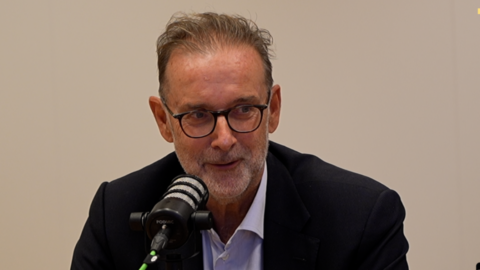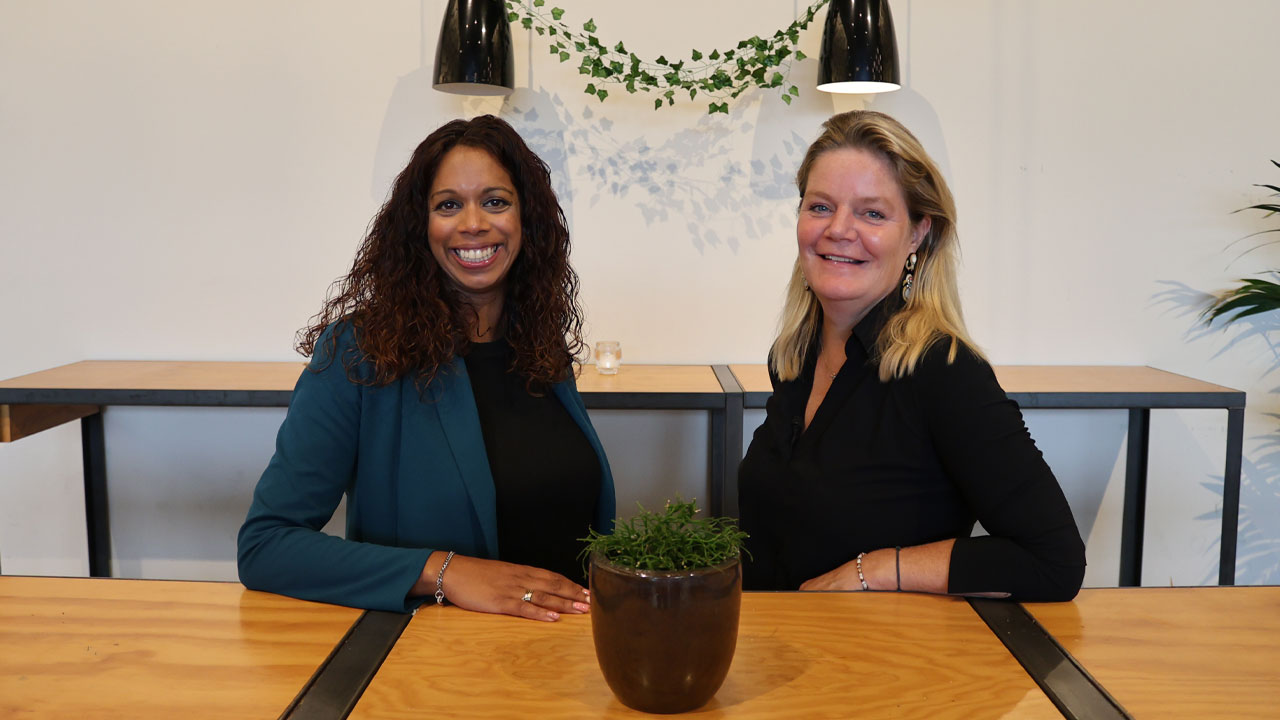
Nicole Maarsen isn’t one to just talk from the sidelines. According to her, anyone who truly wants to understand why something isn’t working must be willing to dive right in. Over the past thirty years, that attitude has taken her through virtually every aspect of the built environment: from financing and project development to real estate investments and government. Helder! spoke with her.
In hindsight, her career may appear to have been strategically mapped out, but she herself puts that perception into perspective. Curiosity was more often the driving force than career planning. At ING Real Estate, she became familiar with the world of finance. At the family-owned Maarsen Group, she developed and managed investments, after which she moved into private equity. As a board member of Achmea’s real estate asset management company, she invested nationwide in residential properties, healthcare real estate, and retail spaces. Yet something was missing: the public sector.
If I feel I need to understand something better, then maybe I should just do it.Nicole Maarsen
Through industry organizations such as NEPROM and IVBN, Maarsen saw how market players defended their positions. But she remained puzzled by why the government and the market so often failed to truly understand each other. “If I feel I need to understand something better, then maybe I should just do it.”
That idea led her, among other things, to the Flexwonen Committee and the National Acceleration Task Force. She now works as a facilitator, advisor, and administrative catalyst for and with various government agencies to innovate and accelerate housing construction.
This puts her exactly where she prefers to operate: at the intersection of the public and private sectors. She speaks the language of developers and investors, but has also come to understand the realities faced by executives, politicians, and civil servants. It is precisely this combination that sets her apart—not only among women, who remain underrepresented at the top of the real estate and finance sectors, but also among her peers in general. Few have come to know the playing field from so many different perspectives.
This embed uses marketing cookies. Accept marketing cookies to show the embed.
Consensus-building is no longer enough
According to Maarsen, the traditional approach to collaboration in housing construction falls short. Stakeholders too often resort to lobbying or consensus-building: pushing through their own views or making compromise after compromise until clear-cut choices disappear. Yet the scale of the challenge actually calls for setting priorities.
That doesn’t mean she shies away from collaboration. On the contrary. Her influence lies in bringing different perspectives together, putting bottlenecks on the agenda, and sparking people’s curiosity. But anyone who mistakes her calm demeanor for endless patience is mistaken. Maarsen describes herself as impatient. She wants to know why something is stalling and keeps pushing until the problem becomes apparent. She acknowledges that this can sometimes cause friction. Yet she believes that’s precisely where progress can be found.
Her approach is practical. Broad concepts like social value, inclusivity, and ESG only take on meaning when they become concrete. At Achmea, for example, she worked on a set of requirements centered on happiness and health. This shifts the focus away from abstract policy and toward lighting, material selection, social interaction, and the mixing of different target groups.
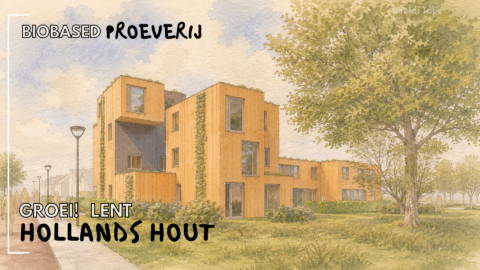
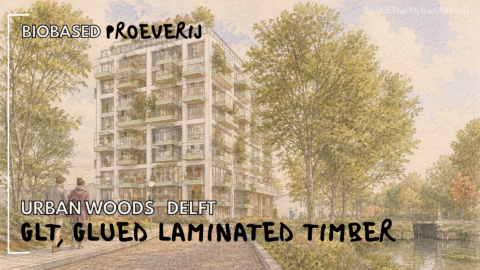
Her experience with a wooden residential tower was not meant to remain a one-time experiment either. She used the knowledge she gained to inspire Achmea and the PME pension fund to embrace biobased construction. She doesn’t measure inspiration by compliments, but by action: will organizations actually take the plunge?
Capital for the Entire City
According to Maarsen, the next major step lies in the financing of area development. The national government is rightly focusing on large housing development sites, but the question of who will finance that development remains too often unanswered. Housing cooperatives have limited resources, developers cannot take everything onto their balance sheets, and pension funds should not be expected to bear development risks without further consideration.
No single source of capital can finance this undertaking on its own. That is why Maarsen sees an opportunity for public-private project agencies in which the government, the market, and investors share responsibility. Housing construction should not be viewed in isolation. Area development also impacts energy, mobility, healthcare, and quality of life.
This is where her deepest motivation comes to the fore: consciously doing better what the sector is already doing. Not just building homes, but building entire cities. Not focusing solely on financial returns, but also, for example, striving to ensure every child has their own bedroom.
Her curiosity remains active in her personal life as well. She’s taking a drawing class with her children and is considering trying her hand at their shuffle dance. It’s typical of her: she doesn’t like to view new worlds from a distance.
Nicole Maarsen wants to know how something works. Then she wants to know how it can be improved. And ultimately, above all: who is willing to actually do it.