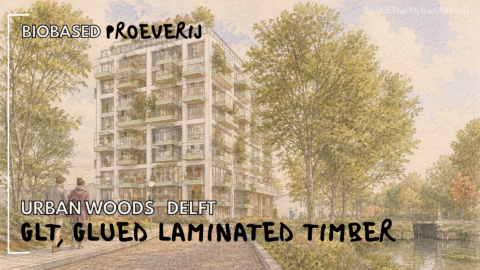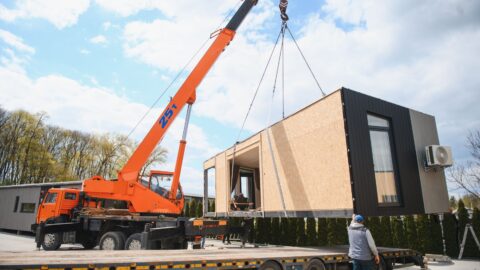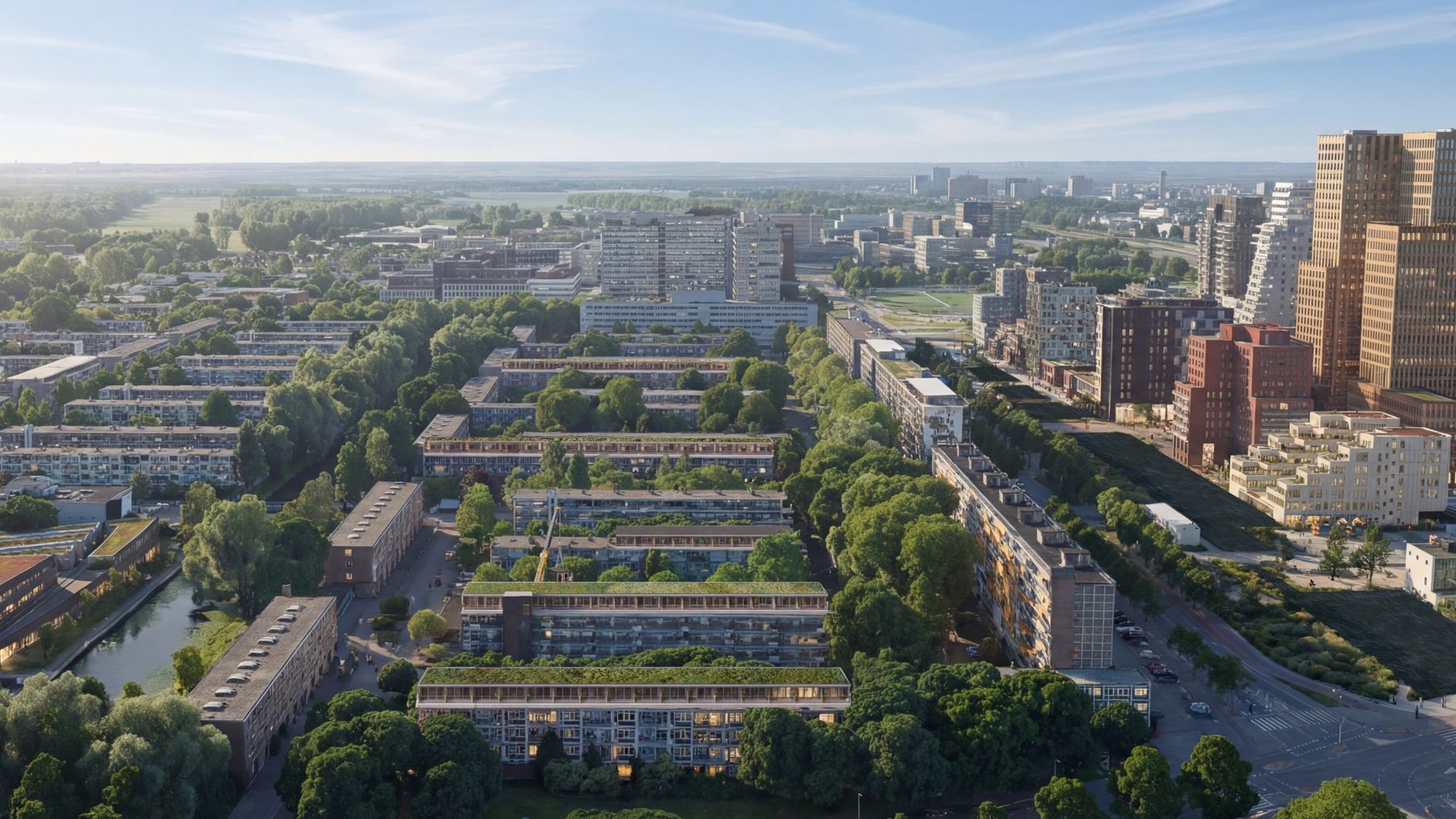
It’s a hot topic: transforming, subdividing, and adding stories to existing buildings. Despite “enormous” potential, the numbers are disappointingly low. Two experts in adding stories acknowledge that it’s a tough sell, but they’re not giving up. “For us, the number of projects has actually doubled.”
The government has high hopes for adding housing to the existing stock by subdividing, transforming, or adding stories to buildings. However, the EIB notes that the total for 2025 will remain stuck at a “meager” 10,000 units—2,000 fewer than the previous year. According to the EIB’s analysts, the government should invest more in new housing on the outskirts of cities.
Why do Optop projects fall through?
Listen now to the latest episode of the Bureau Stoer podcast
Developer Bram Hertzberger, co-founder of Creative City Solutions (CCS), doesn’t disagree, but he also argues that building new homes isn’t the only solution. In fact, According to him, the average turnaround time for an infill project is significantly shorter than that for developing new suburban locations. “That usually takes ten years. You can get an infill project off the ground within two years,” says Hertzberger in the latest episode of the Bureau Stoer podcast.
Fifty projects
Through his company, he helps investors, housing corporations, municipalities, and homeowners’ associations add stories to existing buildings and make them more sustainable. While the EIB observes that the number of housing transformation projects is stagnating, he sees the number of building-top-out projects actually growing. “We currently have about fifty such projects under management or already completed. But unfortunately, we also often see projects fall through prematurely. Usually, the process is set up incorrectly. You can’t first have an architect draw up plans and then look for a contractor to build according to that design. You’ll never get the construction costs right that way. Actually, you should reverse the order of the process.”
He sees other issues arising in homeowners’ associations. For example, he says it’s becoming more common for a single resident (in a group that is largely in favor, ed.) to derail a plan to add one or more stories to an existing building.
Unpleasant evenings
Hertzberger: “Those are very unpleasant and uninviting evenings. I always feel a little embarrassed in a room like that. That’s because there really are people who need money. With that rooftop extension, they can also make their homes more sustainable. If someone is opposed on principle and says they’ll pay for the mandatory sustainability upgrades themselves, they’re sometimes forced to move.”
Above all, Hertzberger still firmly believes in the potential of adding stories and subdividing units. “About four years ago, we conducted a study in the five major cities. We identified 25,000 housing units that we could add to postwar apartment buildings with porches. That’s the low-hanging fruit. We still believe in that.”
Chantal van Schaik, director of Holland Houtland, agrees. “Our mission? To add as many living units as possible to existing buildings using as few materials as possible. The great thing about adding stories is that the roof is already there, and so are the foundations.”
Fixating on the issue is pointless
She regrets that the figures are disappointing, but emphasizes that fixating on numbers is pointless. “And I don’t think it’s wise to immediately conclude, based on these figures, that new construction is the solution. I believe we need to consider both new construction and building within the existing environment,” said Van Schaik.
She, too, acknowledges that several initiatives fall by the wayside early on. “No, I don’t have any figures on that. For example, they might run into trouble with a parking requirement. But I mainly see the plans that do make it a step further,” says the director of Holland Houtland.
Leading municipalities
Van Schaik emphasizes that more and more leading municipalities are adjusting their policies to better utilize existing buildings. “They’re taking a very close look at these kinds of counterproductive trends in the city and the regulations they have in place.”
Curious to know which municipalities those are? And what opportunities exist for industrial builders? And how old the oldest rooftop addition ever is and where it’s located? Then listen to episode 44 of Bureau Stoer.
Also read
Equating “optopping” with razing to the ground is childish