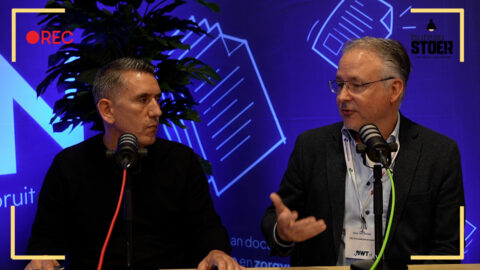
2026 promises to be a great construction year, say three trend watchers in latest episode of the podcast Bureau Stoer. "Big investors want to invest in entire building streams. With that, billions will be released."
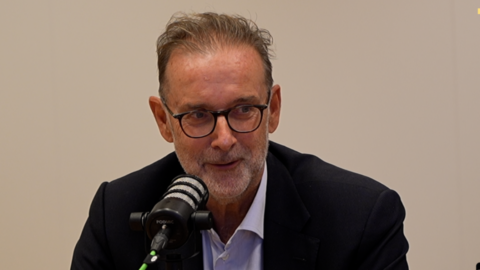
One understands real estate, another biobased construction and yet another innovation. Together, Nicole Maarsen, Dick van Ginkel and Jan Willem van de Groep are the beating heart of Bureau Stoer, the weekly podcast about area development that doesn't let go, but solves. On the eve of New Year's Eve, it's time for an interview with the trio about the old year and the new.
Curious about the story? Read it below or listen to the latest episode of Bureau Stoer.
What was 2025 like for the construction industry?
Jan Willem van de Groep: “Great. A lot has been set in motion in terms of faster, more affordable, and future-proof construction.”
Dick van Ginkel: “I agree. I especially like that construction companies are increasingly focusing on CO2 reduction: how can I build using different materials?”
What was the highlight?
Nicole Maarsen: “The fall of the cabinet—though that may sound a bit cynical. But that fall freed us from ‘the grip of negativity’ we were all caught in. Incidentally, many positive steps were also taken in 2025 to accelerate the pace of housing construction. Hopefully, we can turn that into results in 2026.”
Who was the “builder” of the year?
Jan Willem van de Groep: “Friso de Zeeuw from the Stoer program (which aims to scrap building regulations) really made his mark. The same goes for Fahid Minash, director of NEPROM (the developers’ association). He’s pretty much the ministry’s in-house advisor now, though I’m not sure if that’s always a good thing.”
But which architect or builder made a difference in 2025?
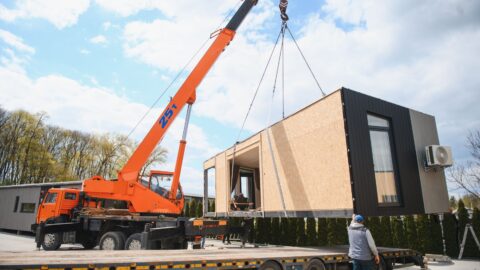
Jan Willem van de Groep: “That brings me back to our friends in Dokkum (Bouwgroep Dijkstra Draisma, ed.). With the carbon-negative Smukwoning, they’re pushing the boundaries of building codes and are even able to push them further.”
Dick van Ginkel: “I find the story of the Van der Hulst construction company impressive. The white-label factory opening this coming summer heralds—by Dutch standards—a completely different way of building. Precisely because they’re opening their doors to all kinds of small and medium-sized businesses.”
Does that make Yvonne van der Hulst the 2025 Woman in Construction of the Year?
Dick van Ginkel: “She has my vote.”
You’re quite optimistic about 2025. But the goal of building 100,000 homes annually is nowhere near being met. Why is that?
Jan Willem Van de Groep: “We’re still paying too much for land. That hangs like a sword of Damocles over the heads of area development projects: we’re piling on a lot of ambitions that we simply don’t have the money for.”
Dick van Ginkel: “I think it’s a combination of factors: grid congestion, lengthy appeal procedures, and the excessively high prices that are, indeed, often paid for land.”
What will be the trend in 2026?
Nicole Maarsen: “Major investors are gradually preparing not only to buy more small buildings, but to acquire entire construction projects. Behind the scenes, they’re really exploring how they can organize more purchasing power. If this trend toward long-term, area-specific investment plans continues, we’re in for a major shift, because it will accelerate the flow of investment capital into the market. Right now, that’s idle capital, and we’re no longer talking about tens of millions, but billions.”
Jan Willem van de Groep: "Agreed. That undercurrent has been going on for some time. I find that unfortunate and think that investors who, for example, are betting massively on bio-based construction should be allowed to do that much more visibly, because then it becomes more normal."
Dick van Ginkel: “We need all kinds of materials, Jan Willem, not just biobased ones. The key is for urban developments to be CO2-resilient… I see healthy construction a bit like the ‘Food Guide.’”
Jan Willem van de Groep: “CO2-negative concrete? That’s good, too.”
What really needs to change in the construction and installations sector by 2026?
Nicole Maarsen: “We need to better manage the complexity (the accumulation of ambitions and requirements, ed.) surrounding area development, because we’re still building too much based on escalation. How? By depoliticizing problems and clarifying earlier what we want to build and where. In addition, we need to do more with data-driven area development.”
Dick van Ginkel: "I am very much looking forward to the installation-free office being developed in Amsterdam. Soon the episode of Bureau Stoer that we made about it will be online... What a new cabinet should do? Pick up solutions from the market and give them a place in better laws and regulations."
Jan Willem van de Groep: "Builders and developers are indeed already really enjoying themselves. The government should create conditions that allow the frontrunners to flourish and show what they can just already do. People think it comes at the expense of speed, but that's nonsense."
This article is a short version of the podcast Bureau Stoer episode 10. Listen to the podcast.
Bureau Tough episode 10
Title: New Year’s Eve with Bureau Stoer: “Investors’ dormant billions are starting to come loose”
Featuring: Nicole Maarsen (expert in area development), Jan Willem van de Groep (expert in bio-based and energy-efficient construction), and Dick van Ginkel (expert in innovation and building regulations)
Presentation: Thomas van Belzen
Editing: Kalynda Haaf (HaafVisual)