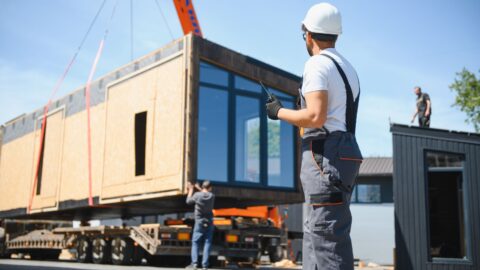
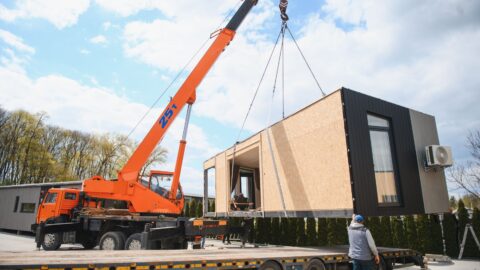
A new construction project without precast concrete is almost impossible to find. On most construction sites, complete walls or floors hang from a crane at some point. They are hoisted with great precision to that one spot in the structure, where they are finally assembled.
Concrete is strong, has good thermal properties, and therefore has been a popular building material for several decades. Currently, the construction task is large and the labor market is tight, and therefore the use of precast concrete is increasing. By building with prefabricated concrete elements, very fast results can be achieved on site with less manpower. Another advantage of precast concrete is that there is less material loss and less waste. One of the few downsides to precast concrete is transportation. It often involves elements that are "exceptionelle" in size and/or weight, and that means transportation requires both a permit and special escort. That costs extra time and money.
Factory
The manufacturing process of precast concrete elements takes place in the factory. Walls, floors and roof sections can be manufactured there quickly, efficiently and with great precision. Conditions there are optimal, and this is especially important for concrete. In fact, weather conditions can significantly delay the drying time of structural work on a construction site. With precast, thanks to the right conditions, it is possible to say exactly when concrete elements from the factory are cured. That means precast concrete construction can be planned much better.
Unique appearance
The world of concrete is changing considerably. Especially in the field of sustainability, there are still steps to be made. Producing the binder cement has quite an impact on the environment. That is why people are experimenting with binders that cause less CO₂ emissions, such as lava flour, limestone flour, calcined clays, pozzolans and geopolymer.
Other innovations concern aesthetics. When prefabricating concrete, it is possible to customize things like surface texture and color. An architect can have precast concrete assembled and manufactured in such a way that it can be a unique feature in a design. For example, a facade element with a graphic pattern gives a building a totally different look than a smooth surface. And adding pigments to the mix creates colored concrete. Colored concrete is still rarely used in residential construction. In public spaces you see it more often, think of sidewalks, squares and playgrounds.
Reuse
Concrete has a long lifespan, but a building may be demolished for whatever reason. Pilots are being done with "neat" building demolition to reuse concrete components such as floors, walls and pillars. This reduces the need to create new concrete, and reduces waste. If the elements do become damaged after removal, they can also be pulverized to serve as the basis for new concrete.
Green concrete
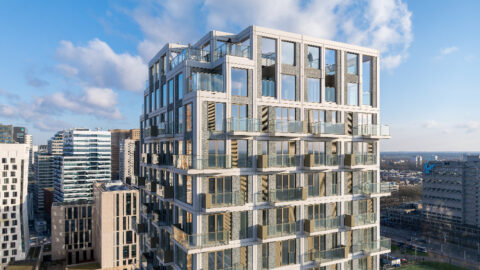
Sustainably produced concrete is referred to here and there as "green concrete. But green concrete can also be taken literally, just look at the Wonderwoods complex between Utrecht CS and the Jaarbeurs complex. In total, the greenery on, to and in Wonderwoods consists of 280 trees and 75,000 plants, comparable to one hectare of forest. This is also possible with prefab concrete elements. Good news when it comes to greening urban areas in the face of climate change. With the added benefit of looking beautiful!

This is an article from Construction and Installation Hub. Want to keep up with all the news from the construction and installation industry? Then take a look at the hub and sign up for the online community.
↗