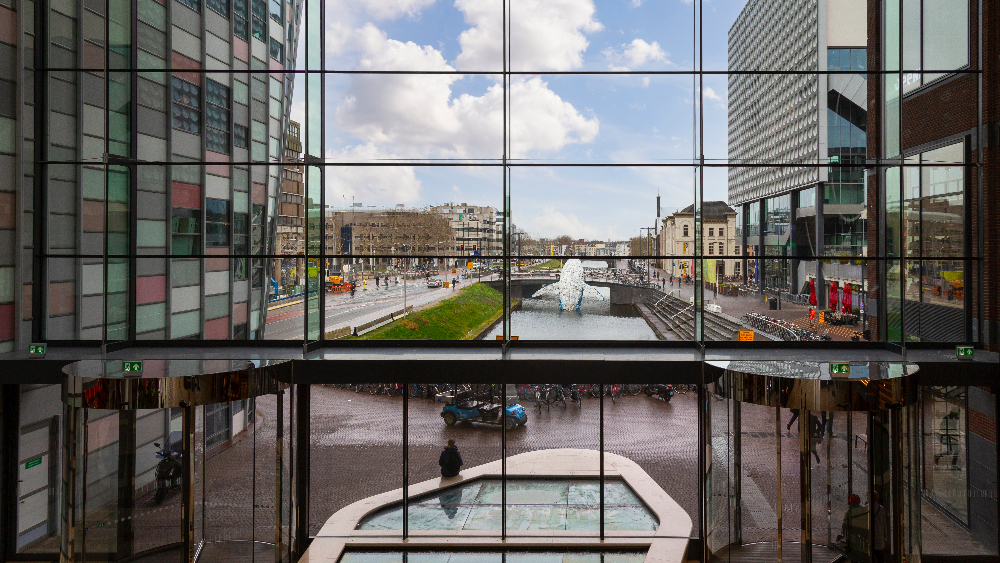
It was a hot summer. And summers are going to get hotter more often. So the question arises: how do we keep our cities livable as temperatures continue to rise? In this episode of “Expedition Smart Building,” Marjet Rutten stays in Utrecht to make a point.
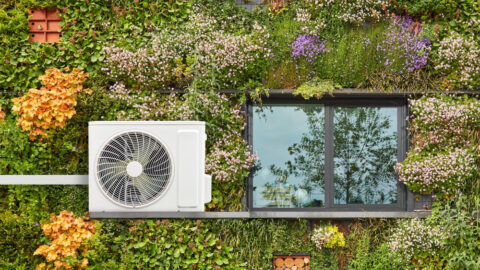
More air conditioners aren’t the answer to hotter summers. Utrecht opted for a much more fundamental solution. A section of the historic canal, which had been filled in during the 1970s to make way for a highway, has been restored to its former state as water. Asphalt has given way to water, trees, and greenery.
From Highway to Urban Nature
For decades, we designed cities primarily with accessibility, efficiency, and efficient use of space in mind. Nature came later: a tree here, a park there, a green roof if there was room. But with hotter summers and heavier downpours, “cosmetic greening” is no longer enough. Water and green spaces must become an integral part of the city’s infrastructure.
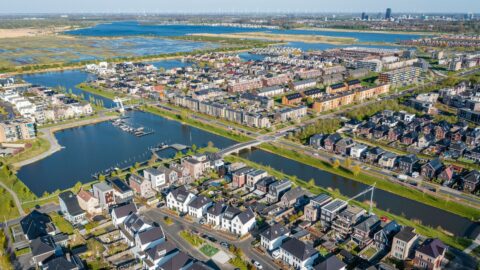
Utrecht shows how this can be done. The Catharijnesingel was partially filled in during the 1970s to make room for traffic. Now, water flows there once again. Greenery has returned along the canal, creating space for walking, relaxing, and socializing.
A single initiative thus serves multiple purposes. Water helps make the city more climate-resilient, trees and plants provide cooling and living space for people and animals, and residents are rewarded with more attractive public spaces that encourage social interaction and, in turn, help combat loneliness.
Greenery isn't just decoration; it's part of the urban infrastructure.
Take the tree, for example. It provides shade, evaporates water, filters particulate matter, offers a habitat for animals, and makes a street more attractive. During hot spells, trees can also significantly help lower the temperature at street level.
And green spaces represent economic value. Research shows a link between green spaces in residential areas and higher property values. On top of that, there are potential savings on cooling, water management, and healthcare.
Meanwhile, Utrecht’s canal reveals something else: a city is never finished. Decisions made in the past can be reversed. Asphalt can become water again. Paved surfaces can turn green again. What once seemed like progress—more space for cars—can give way, decades later, to a different idea of progress. In a warmer climate, that’s becoming less and less of a luxury.
The Utrecht Canal Survival Kit
Water as Infrastructure: A Lost Water Feature Has Been Restored. Water is once again taking on an important role in the city’s design.
Greenery as a system: Greenery is not a mere addition to a concrete-dominated design, but forms a unified whole with water and public spaces.
️ Space for cooling: Water , trees, and greenery help reduce heat stress and make the city more pleasant during hot spells.
Multiple benefits: A single initiative contributes to biodiversity, climate adaptation, quality of life, more attractive public spaces, and higher property values.
From mitigation to restoration: The canal demonstrates what regenerative thinking can mean—not only causing less damage, but also restoring what had previously disappeared from the city.
Survival tip: Don’t treat nature as an afterthought
If you want a heat-resilient city, don’t wait until the end of the design process to ask where you can fit in a few more trees. Flip it around. Start with soil, water, shade, and biodiversity. And then design buildings, streets, and infrastructure around those elements. Because with hot summers becoming the new normal, cities don’t just need more green space. We need to design them differently.
In Southern Europe, Asia, and the Middle East, cities have been designing with heat in mind for much longer. Narrow streets, shade, trees, water, and wind aren’t just decorative elements there—they’re part of the city’s climate system. Now that Dutch summers are getting warmer, that design expertise is becoming relevant here as well. The question, then, is: why do we in the Netherlands still build so many squares, streets, and neighborhoods as if heat were an isolated incident? Stop with cosmetic greening and start by taking the ecosystem as your starting point.
About the Smart Building Expedition

Construction is like surviving in a jungle of rules, ambitions, and problems. In “Expedition Smart Building,” Marjet Rutten takes you every week to a groundbreaking place or location where they’ve overcome all the obstacles and hurdles along the way. If you also have a special place you’d like to highlight, please email the editorial team.
Rutten has been working in the industry since 1998 and wants to contribute to a dynamic, successful construction sector. In addition to her work for Building Balance, she is active as a Gideon and serves on numerous government review committees and juries, where her responsibilities include assessing the market potential of planned product and process innovations. Her latest book, *From Brick to Blockchain*, about developments in the sector leading up to 2040, can be ordered here. Looking for more inspiration on developments in our sector? Visit www.debouwin2040.nl