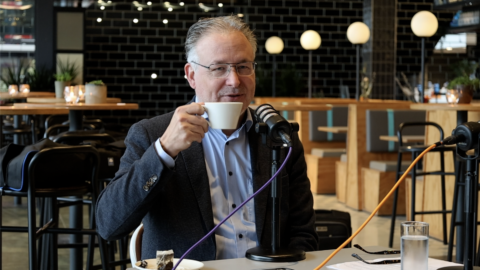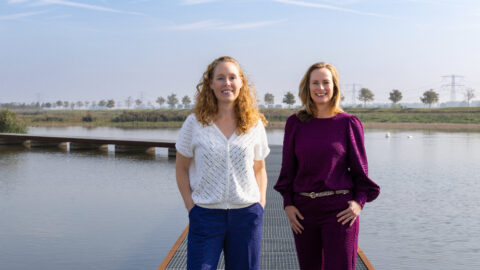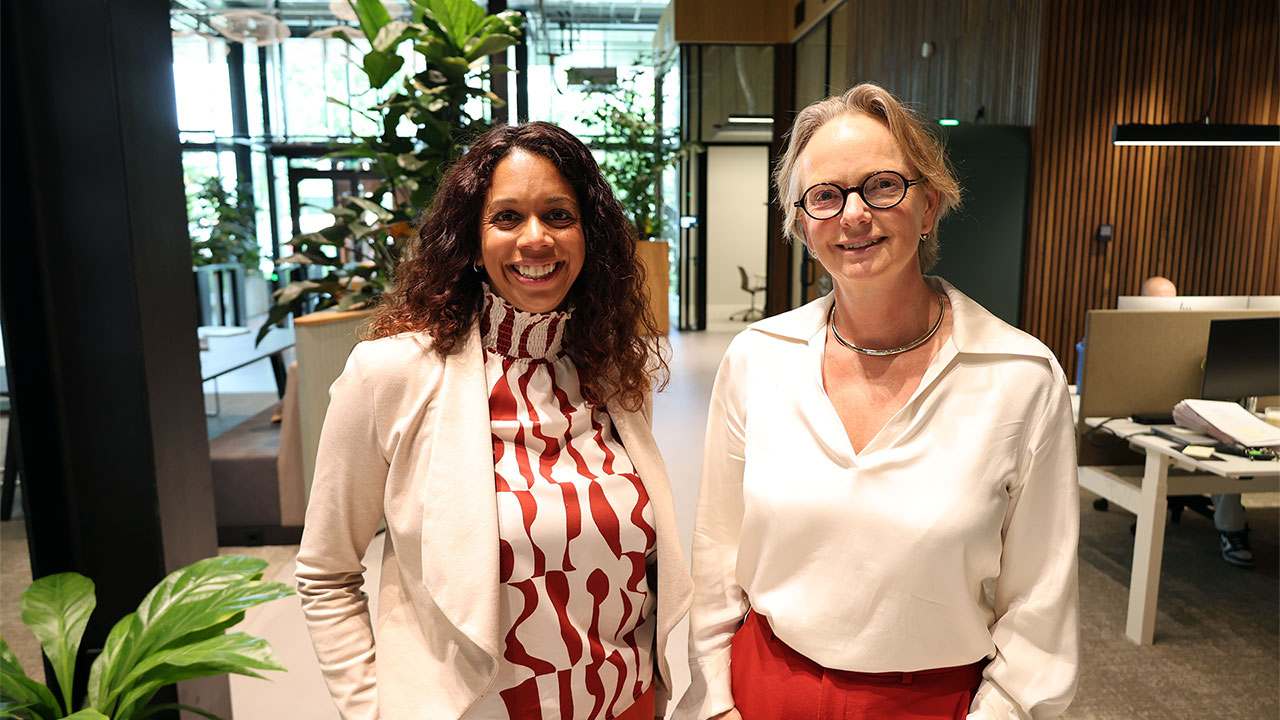
Dorien Staal doesn’t wait for change to happen on its own. She connects people and technology, seeks out different perspectives, and steps up when things get challenging. With one goal in mind: building a world that works for more people. Helder! spoke with her.
Ask Dorien Staal where she feels at home, and her answer says a lot about her approach to work. Not in the boardroom, but not exclusively on the construction site either. She prefers to operate in between: between executives and people on the production line, between technology and people, and between different perspectives.
It’s the common thread running through a career she never mapped out. Staal trained as an engineer, worked in sales, ended up in HR, and became the director of a concrete plant. Not because of a preconceived career plan, but out of curiosity. Something catches her attention; she wants to know how it works and delves into it. Until the various pieces of the puzzle suddenly fall into place.
That’s exactly what happened with that concrete plant. When Staal, as HR director, was asked if she knew anyone for the CEO position, she replied spontaneously: “I want to do that.” The response—“but you’re from HR”—didn’t stop her. When a board member sent her the profile of another candidate, she sent back her own LinkedIn profile: this is a good candidate.
Step up when things get tough
That’s typical of her style. First, she steps forward intuitively; then, she takes responsibility for what she’s set in motion. “Now I have to own it,” she says.
This embed uses marketing cookies. Accept marketing cookies to show the embed.
That attitude put her at the center of a debate about the future of concrete in 2019. On stage, she used the term “concrete shame.” Not because she was against concrete—on the contrary—but because she believed the industry could not ignore the climate challenge. The statement drew heavy criticism.
That’s precisely where her vision of leadership intersects with her personal character. When things get tough, Staal often sees people taking a step back. She herself tries to stand her ground or even step forward. “When the wind picks up,” she says, “the question is whether you’ll get out of the wind or stand together in it.”
Vulnerability, too, requires courage
Later, “courage” took on a more personal meaning for Staal. She decided to be open about her eye condition, which affects her daily life and her work. For a long time, she had hesitated. What would being open mean for her career and future opportunities?
She eventually shared her story at Dura Vermeer and later in public as well. The response was warm. Moreover, opportunities kept coming her way: she was given the freedom to lead the Virtual Factory, a role she helped shape herself. The experience taught her that vulnerability not only reveals something, but can also open up new possibilities.
Technology with a Social Purpose
With the Virtual Factory, Staal’s curiosity is now focused on digitization, AI, and smarter ways to connect construction companies with existing manufacturing firms. But for her, technology is not an end in itself. Ultimately, every idea boils down to the same question: Does this contribute to affordable housing?
Behind this lies a broader social motivation. Staal is passionate about issues surrounding inclusion, opportunity, and the impact the built environment has on people’s lives. Even outside of work, she consciously seeks out different perspectives. For example, she read “Poverty Explained to People with Money” by political scientist Tim ’S Jongers to better understand her own “bubble” and then tries to connect those insights to her daily work.
“Be a little kind to one another”
Perhaps that’s why her answer to the question “What would you put on a construction fence?” is so apt. “Be a little kind to one another.”
After all the talk about courage, fighting spirit, innovation, and change, she chooses connection. According to her, we are sometimes too harsh and too quick to judge. “Take the time to understand the other person, listen to a different perspective, and try to act out of love and connection. Try to put yourself in another person’s shoes, just as you would at home.”
This perhaps sums up Staal better than any management term: daring to step forward, but never forgetting who you’re doing it for.