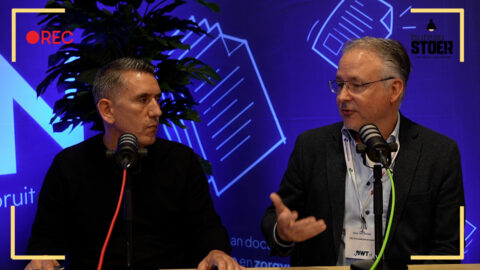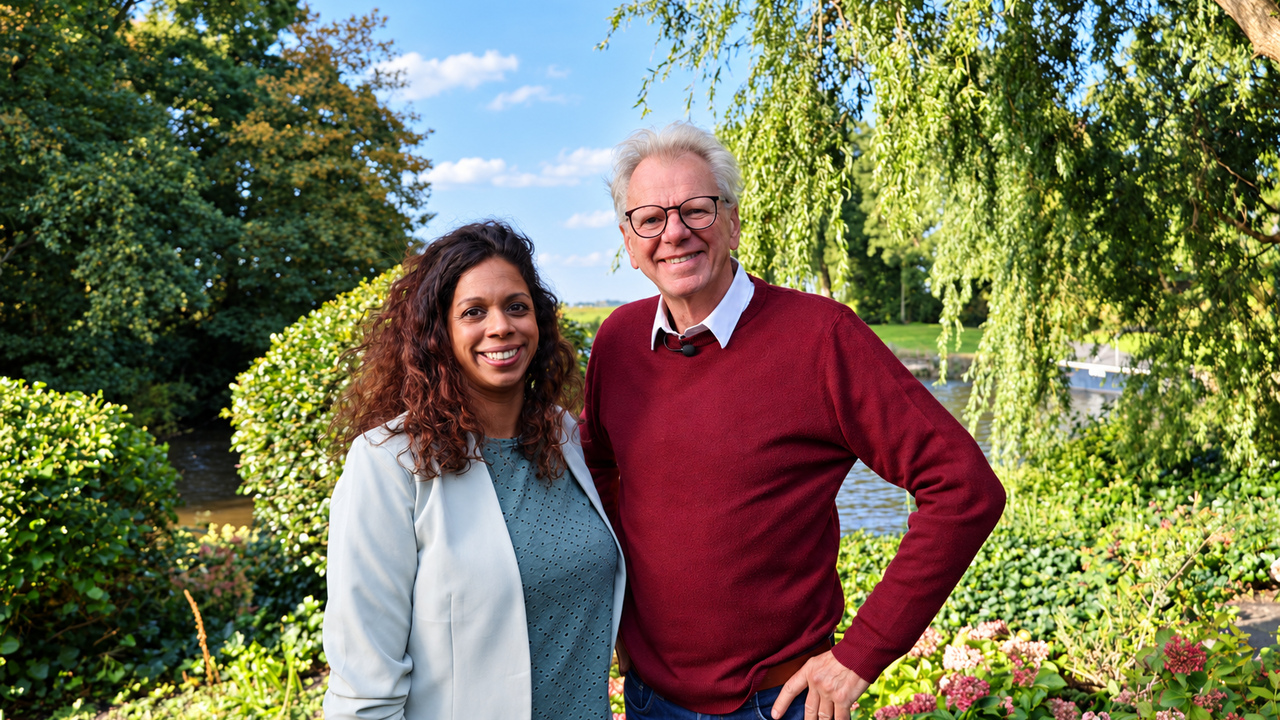
The Netherlands needs to stop overreacting, says Friso de Zeeuw. The experienced area developer sees how policy gets bogged down in trendy ideas, overreactions, and ever-expanding bureaucracy. His alternative is down-to-earth: distinguish between temporary trends and structural changes, don’t overload cities, and, above all, opt for plans that are truly feasible. Helder! spoke with him.
If you ask Friso de Zeeuw about what drives him, you won’t get a compelling story about people and their emotions. It is primarily the environment in which people live that fascinates him: the combination of housing, water, infrastructure, green spaces, and the economy. That is precisely where his administrative experience, scientific work, and passion for urban development converge.
In this country, we don’t make enough of a distinction between temporary and structural changes—even as we’re already overreacting.Friso de Zeeuw
After fifty years in the business, De Zeeuw views ideas presented as innovative with skepticism. According to him, many innovations turn out to be old concepts in new packaging. Other developments are temporary, yet are immediately regarded as a definitive shift.
That critical stance has earned him a reputation as a contrarian who mainly stands in the way. He himself doesn’t seem to have much of a problem with that. He knows that his age and experience can easily be interpreted as a desire to preserve the status quo. In his view, there’s no point in pretending to be younger or more trendy. What matters more is whether his criticism holds water.
This embed uses marketing cookies. Accept marketing cookies to show the embed.
The city cannot expand indefinitely
De Zeeuw is more positive about Dutch urban development than his sharp tone might suggest. Despite the many procedures, conflicting interests, and regulations, he believes that, in general, cities are carrying out quite good projects. According to him, the main danger lies in ever-increasing densification.
About 70 percent of new housing construction is currently planned for inner-city areas. De Zeeuw would prefer to see a more balanced distribution, with half of the homes being built outside existing urban areas—not in soulless suburban developments, but in modern garden cities with space for green areas, water, flora, and fauna.
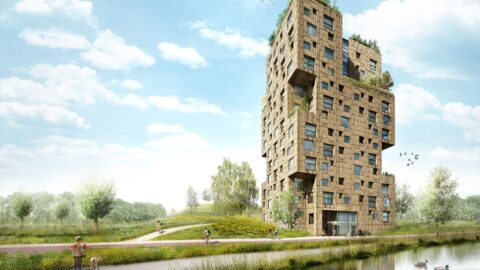
In doing so, he challenges the notion that the Netherlands should focus almost exclusively on building upward. High-rise buildings can be part of the solution, but he believes that treating apartment buildings as the obvious answer to the housing shortage is too narrow a view. A livable city also requires space for climate adaptation, nature, and a pleasant everyday environment.
De Zeeuw also advocates for more decisive choices in rural areas. Some areas can be more explicitly designated for agriculture, including the technological innovations needed to produce more efficiently. Elsewhere, more space can be created for nature. Instead of trying to combine all functions everywhere, he favors a clearer approach to land-use planning.
Good intentions, but a sluggish implementation
According to De Zeeuw, the biggest obstacle isn’t a lack of ambition, but the way the Netherlands tries to solve problems. As soon as something goes wrong, there’s often a proliferation of government agencies, consulting firms, regulations, and layers of management. He sees the approach to earthquake damage in Groningen as a painful example: residents are visited by countless experts, while actual compensation is a long time coming.
There’s a second factor at play here. After years of underestimating the issue, policymakers tend to swing too far in the opposite direction. At first, not enough is done; then measures are implemented that leave little room for nuance or adjustment. The result is costly policies that may project decisiveness but don’t necessarily work better.
De Zeeuw’s political switch from the PvdA to the VVD aligns with his emphasis on practicality and economic viability. According to him, anyone who wants to finance public services, housing construction, and sustainability efforts must also support entrepreneurs who take the initiative and create economic value. Simply talking about the distribution of wealth is not enough.
Humor, cynicism, and a sense of perspective
He sees his own contribution as consisting of two parts. As a professor, he helped define area development as a field of study and further professionalize it. As a columnist and commentator, he challenges what he considers to be pseudo-innovations and peculiar policy ideas. Positive professional development on the one hand, necessary “grass-cutting” on the other.
Underlying this is a rather unromantic outlook on life. De Zeeuw feels a kinship with Albert Camus’s absurdism: people push the boulder uphill, only for it to inevitably roll back down again. Progress exists, but rarely without setbacks. Humor, cynicism, and self-deprecation are therefore not mere embellishments, but ways to stay afloat. His advice to the Netherlands can ultimately be summed up in three words: “Tame the bureaucracy.” Not because complex problems are simple, but precisely because more rules and institutions do not guarantee a better solution.